Eid is more than just a festive day; it’s a moment that brings families together, strengthens communities, and inspires acts of kindness.
If you’ve ever wondered “what does Eid mean?”, you’re not alone. While many recognize it as a major holiday in Muslim culture, its deeper significance often goes beyond gifts, feasts, and celebrations.
Whether you’ve seen colorful lights in the streets, heard the joyful laughter of children receiving gifts, or shared a warm meal with neighbors, Eid is about connection, gratitude, and celebration of life.
Understanding Eid’s meaning can enrich your perspective, whether you’re observing it yourself or simply appreciating it as a cultural experience.
In this article, we’ll break down the history, traditions, and emotional significance of Eid in a way that’s easy to understand, relatable, and inspiring.
What Does Eid Meaning?
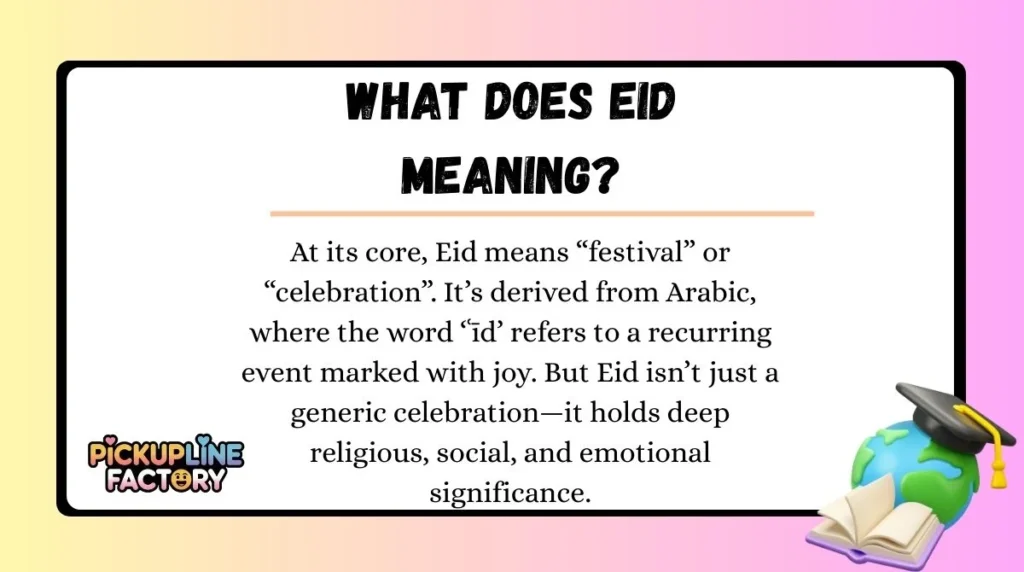
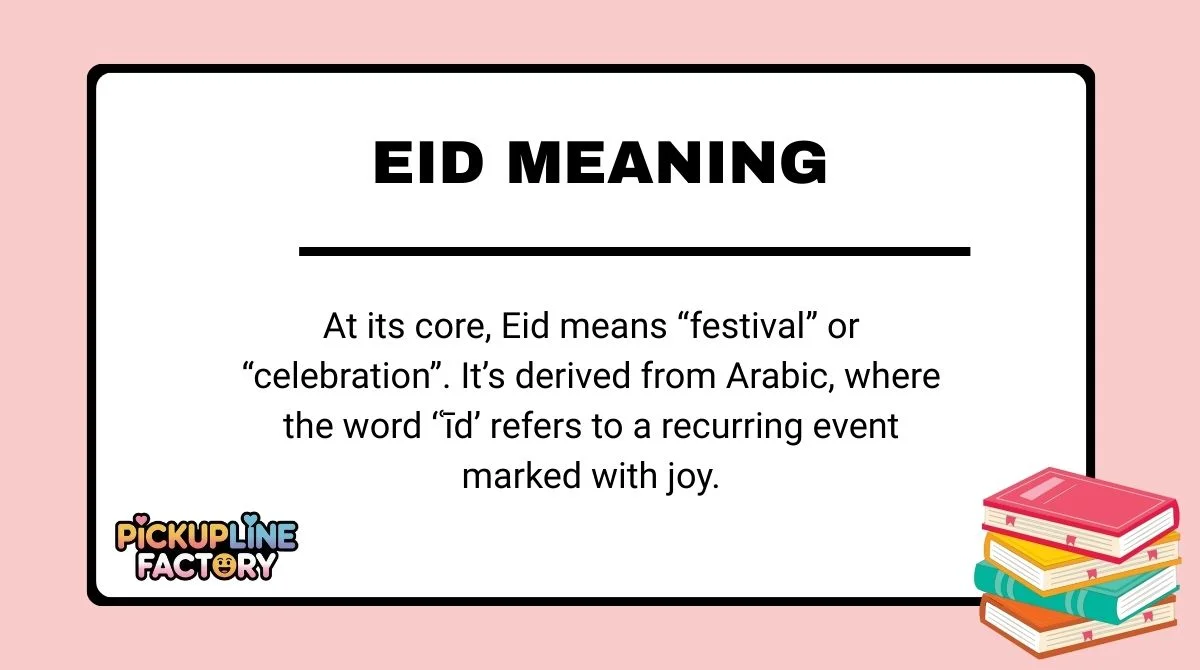
At its core, Eid means “festival” or “celebration”. It’s derived from Arabic, where the word ‘ʿīd’ refers to a recurring event marked with joy. But Eid isn’t just a generic celebration—it holds deep religious, social, and emotional significance.
For instance:
- After a month of fasting during Ramadan, Muslims celebrate Eid al-Fitr, which literally means “Festival of Breaking the Fast.” It’s a day of joy, reflection, and gratitude.
- Eid al-Adha, also known as the “Festival of Sacrifice,” commemorates Prophet Ibrahim’s devotion and obedience to God. Families honor this by giving to charity and sharing meals with loved ones.
- Beyond religious observances, Eid represents connection, generosity, and community bonding, making it relatable across cultures.
In simple terms, Eid is not just a holiday—it’s a moment to pause, reflect, and share joy with others.
Origin and Background of the Term
The word Eid originates from Arabic, dating back centuries in Islamic history. The first Eids were celebrated in the early days of Islam, and the term has remained largely unchanged. Over time, these celebrations evolved into rich cultural events, blending spiritual devotion with social traditions.
One interesting story comes from the early days of Eid al-Fitr. After a month of fasting during Ramadan, Prophet Muhammad encouraged Muslims to celebrate the day with family, feed the needy, and wear their best clothes. This wasn’t just about festivity—it was about gratitude, empathy, and renewal.
Similarly, Eid al-Adha traces its origins to the story of Prophet Ibrahim’s willingness to sacrifice his son in obedience to God. Although he didn’t go through with the act, the event became a symbol of faith, devotion, and charity, commemorated annually by Muslims worldwide.
Through these traditions, the word Eid became synonymous with joy, community, and spiritual reflection, transcending mere festivity.
Eid Meaning in Islam
In Islam, Eid holds a deep religious and spiritual significance. It is not just a celebration, but a time of gratitude to Allah, reflection, and strengthening bonds with family and community. Muslims celebrate two main Eids each year: Eid al-Fitr, which comes after the holy month of Ramadan, and Eid al-Adha, which coincides with the pilgrimage of Hajj.
Eid in Islam begins with a special prayer called Salat al-Eid, performed in congregation. It is a time for charity, kindness, forgiveness, and spreading happiness. For instance, before Eid al-Fitr, Muslims give charity (Zakat al-Fitr) to help those in need, ensuring everyone can join in the celebration.
Spiritually, Eid reminds Muslims of faith, sacrifice, patience, and gratitude. It’s not only about new clothes and delicious food but also about sharing blessings, remembering Allah, and strengthening unity within the Ummah.
How Eid Meaning Is Used in Daily Life
Eid isn’t just a word—it’s a feeling and a way of life during the celebrations. Here’s how it shows up in everyday moments:
- Greeting friends and family: People say “Eid Mubarak”, meaning “Blessed Eid,” to wish joy and prosperity.
- Feasting and meals: Families gather for large meals, sharing dishes like biryani, sweets, and traditional desserts.
- Gift-giving: Children often receive money (Eidi) or presents from elders.
- Charity and kindness: Eid is a time to help the needy, reflecting the deeper meaning of generosity.
- Community prayers: Large gatherings in mosques or open fields strengthen social bonds.
- Decorating homes: Lights, lanterns, and festive décor turn ordinary spaces into joyful hubs.
Everywhere you look during Eid, the word isn’t just spoken—it’s felt in actions, smiles, and shared moments.
Emotional or Practical Meaning of Eid
While the religious context is vital, Eid also carries emotional and social weight.
- Emotional meaning: Eid promotes joy, gratitude, and togetherness. Imagine a child opening their first gift of the day, or families laughing together over shared meals—that’s Eid in action.
- Practical meaning: Beyond feelings, Eid encourages practical virtues like charity, empathy, and self-discipline, which remain relevant long after the celebration ends.
In today’s fast-paced world, Eid serves as a reminder to pause, connect, and celebrate life’s blessings—a lesson anyone can appreciate, regardless of background.
Similar or Related Terms
- Ramadan: The holy month of fasting before Eid al-Fitr.
- Eid Mubarak: A greeting meaning “Blessed Eid.”
- Zakat: Charity given during Eid al-Fitr to help those in need.
- Sacrifice (Qurbani): The act of giving during Eid al-Adha.
- Festival: A broader term for celebrations, but Eid has religious and cultural depth.
Common Misunderstandings About Eid
- Eid is only about food and gifts – False. It’s primarily about gratitude and spiritual reflection.
- All Muslims celebrate Eid the same way – Wrong. Traditions vary by region and culture.
- Eid is a one-day event – Partially true; celebrations often last 2–3 days.
- Eid is only religious – While rooted in faith, it fosters social, emotional, and cultural values.
- Eid Mubarak is mandatory to say – It’s a custom, not a religious requirement.
- You must be Muslim to enjoy Eid – Anyone can participate respectfully and share in its joy.
Examples of Eid Meaning in Sentences
- “I love visiting my family every year during Eid—it’s the best time for laughter and food.”
- “She wished me Eid Mubarak and handed me a small gift.”
- “During Eid, we donate clothes and food to help those in need.”
- “The streets look magical during Eid, full of lights and decorations.”
- “Children wake up excited to receive their Eidi from grandparents.”
- “Eid teaches us the value of gratitude and generosity.”
- “Even neighbors who aren’t Muslim join the community feast during Eid.”
- “Eid isn’t just a holiday; it’s a reminder to reflect and connect with others.”
Why Understanding Eid Meaning Matters Today
In today’s multicultural world, understanding Eid is more important than ever. It fosters respect, empathy, and inclusivity, bridging cultural gaps. For businesses, schools, and communities, recognizing Eid helps build stronger relationships.
Moreover, learning the meaning behind Eid encourages people to appreciate the values of generosity, patience, and reflection, which are universally beneficial. It’s not just about celebration—it’s about embracing humanity in small, meaningful ways.
Eid Meaning in English
The word Eid in English simply means “festival,” “celebration,” or “feast.” It comes from the Arabic term “ʿĪd,” which refers to a recurring occasion of happiness and joy. In English usage, Eid is commonly understood as a special religious celebration observed by Muslims around the world. There are two major Eids: Eid al-Fitr and Eid al-Adha.
Eid represents more than just a holiday—it symbolizes togetherness, gratitude, and celebration after devotion. For example, Eid al-Fitr marks the end of fasting in Ramadan, while Eid al-Adha honors sacrifice and faith. In English conversations, people often say things like, “Eid is a joyful festival celebrated with family, food, and prayers.”
So, when translated into English, Eid captures the essence of a happy occasion filled with blessings, sharing, and community spirit. It’s a word that reflects joy, unity, and celebration across cultures.
eSIM Meaning
An eSIM (short for embedded Subscriber Identity Module) is a digital version of the traditional physical SIM card used in mobile devices. Instead of inserting a removable SIM card into your phone, tablet, smartwatch, or laptop, an eSIM is built directly into the device and can be activated through your mobile carrier using a QR code or an activation profile. This technology allows users to switch between network providers, add multiple phone plans, or activate international data plans without changing a physical SIM card. As more smartphones and connected devices adopt this technology, understanding the eSIM meaning has become increasingly important. It offers greater convenience, saves space inside devices, and supports modern features such as dual SIM functionality. Whether you’re traveling abroad, changing carriers, or setting up a new device, an eSIM makes the activation process faster and more flexible. Its growing popularity reflects the shift toward more digital and user-friendly mobile connectivity solutions.
Frequently Asked Questions
What does Eid mean in simple words?
Eid simply means a festival or celebration, often tied to Islamic religious observances, bringing joy, gratitude, and community bonding.
Is Eid positive or negative?
Eid is entirely positive, symbolizing happiness, generosity, and spiritual reflection.
Where is Eid commonly used?
Eid is celebrated globally in Muslim communities, including countries like Saudi Arabia, Pakistan, Indonesia, the UAE, and even in Western nations.
Is Eid formal or informal?
It’s both. Saying Eid Mubarak is polite and culturally expected, but celebrations can be informal, joyful, and family-oriented.
Why do people search for Eid meaning?
Many people want to understand its cultural, religious, and emotional significance, especially if they interact with Muslim friends, colleagues, or neighbors.
Conclusion
Understanding Eid meaning goes beyond knowing it as a holiday—it’s about joy, generosity, and reflection.
Whether you’re sharing meals, exchanging greetings, or helping others, Eid reminds us to embrace gratitude, connection, and kindness.
So next time you hear someone say “Eid Mubarak,” remember it’s more than words—it’s an invitation to celebrate life, love, and community. 🌙✨

Happy is a passionate content creator and blogger who loves sharing creative ideas, meaningful words, and trending content with readers worldwide.With a simple writing style and fresh perspective, Happy aims to make every article engaging, helpful, and enjoyable to read.