Have you ever looked at something and thought it was one way, only to realize it was completely different? That’s the power of illusion.
From magic tricks to everyday misunderstandings, illusions are everywhere, shaping the way we see and interpret the world.
But what exactly does illusion mean, and why does it matter in our daily lives?
Understanding illusions is not just for psychologists or artists—it helps us become more aware of our perceptions, challenge assumptions, and even enjoy life’s playful mysteries.
In this article, we’ll break down the meaning, origin, and real-world examples of illusions. We’ll explore how illusions affect our emotions, social interactions, and decision-making. By the end, you’ll see that illusions aren’t just tricks—they’re fascinating glimpses into how the human mind works.
What Does Illusion Mean?
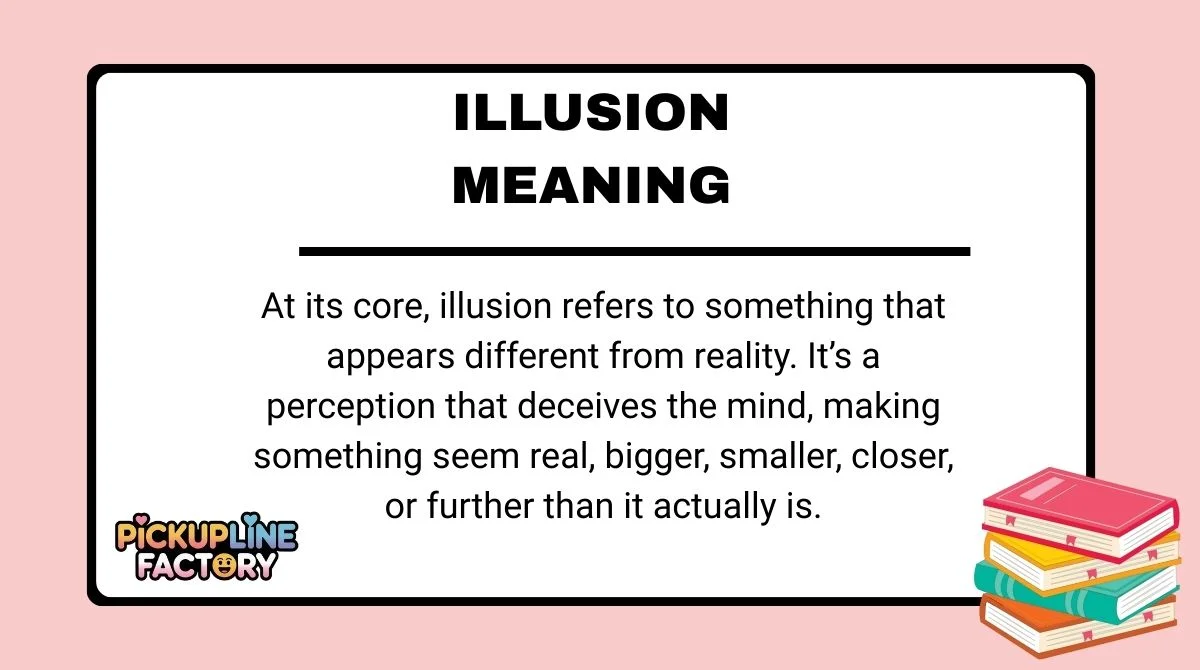
At its core, illusion refers to something that appears different from reality. It’s a perception that deceives the mind, making something seem real, bigger, smaller, closer, or further than it actually is.
Think of it this way: when you stare at a mirage on a hot road, you think you see water—but it’s just light bending through the heat. That’s a classic illusion. Another example is a magician pulling a coin out of thin air. Your eyes believe it’s real, even though your brain knows better.
Even simple things, like thinking a friend is waving at you but it’s actually someone else, fall under the umbrella of illusions. In short, illusions play tricks on our senses, making the world more surprising—and sometimes confusing.
Origin and Background of the Term
The word illusion comes from the Latin illudere, meaning “to mock” or “to play with”. Historically, it was used to describe tricks or deceptions, especially in theater and literature. Ancient Greek philosophers even explored illusions to understand human perception, pondering why our senses sometimes lie.
In the Middle Ages, illusions were linked to magic and mystical experiences. Magicians, storytellers, and even painters mastered optical illusions to astonish audiences. Over time, psychology adopted the term to study how our mind interprets reality, making it a central concept in understanding human cognition.
Imagine walking through a medieval fair: jugglers, mirrors, and shadow plays were all designed to challenge your perception. That playful trickery is the historical heartbeat of the word illusion.
How Illusion Is Used in Daily Life
Illusions aren’t just for museums or magic shows—they pop up all the time. Here are some everyday examples:
- Optical illusions: That spinning wheel or impossible staircase that looks real but isn’t.
- Mirages on the road: Seeing water on a hot highway.
- Social media filters: Making someone’s face or background appear different.
- Misjudging distances: Thinking a coffee cup is closer than it is.
- Advertising tricks: Making products appear larger or more appealing.
- Magic tricks at parties: Pulling a rabbit out of a hat always impresses.
Even subtle illusions, like thinking a friend is angry when they’re just tired, affect our emotions and interactions daily. Recognizing these illusions can help us respond more wisely.
Emotional or Practical Meaning of Illusion
Illusions aren’t just visual—they’re emotional, psychological, and practical. They remind us that the world isn’t always what it seems. Emotionally, illusions can spark wonder, excitement, or fear. Think of watching a magician or seeing a stunning sunset reflected in water—it feels magical.
Practically, illusions teach us caution. Overestimating or underestimating something based on perception alone can lead to mistakes. Understanding illusions strengthens our critical thinking, making us less likely to fall for scams, misleading advertising, or false impressions.
Culturally, illusions appear in art, movies, and storytelling, helping us explore deeper truths about reality and human perception.
Similar or Related Terms
- Hallucination: Perception without an external stimulus; often linked to illness or drugs.
- Mirage: A type of optical illusion, usually in deserts or roads.
- Deception: Intentional misleading of someone, unlike natural illusions.
- Phantasm: Something imagined or appearing unreal; ghostly.
- Optical illusion: A visual phenomenon tricking the eyes.
Each term has subtle differences, but all involve a gap between perception and reality.
Common Misunderstandings About Illusion
- Illusions are always visual. False! They can affect hearing, touch, or emotions.
- Illusions are fake. Not exactly—they reflect real phenomena but our brain interprets them differently.
- Only magicians create illusions. Reality itself constantly deceives our senses.
- Illusions are harmful. Many are fun, educational, or even inspiring.
- Illusions and lies are the same. Illusions may not be intentional; lies are deliberate.
- Everyone sees the same illusion. Perception varies by person and context.
Understanding these clarifies why illusions matter in psychology, art, and daily decision-making.
Examples of Illusion in Sentences
- The magician’s trick was a perfect illusion—everyone gasped in amazement.
- The desert heat created a mirage, an illusion of water in the distance.
- Social media filters can create an illusion of perfection that isn’t real.
- Walking past the glass, I almost tripped—an optical illusion fooled me.
- Love at first sight can feel like an illusion, but the feelings are real.
- The painting created a depth illusion, making the room look bigger.
- His calm demeanor was an illusion; inside, he was panicking.
- The sunset on the lake was a breathtaking illusion, reflecting the sky perfectly.
Why Understanding Illusion Matters Today
In a world flooded with digital media, advertisements, and social pressure, understanding illusions is more important than ever. Illusions affect decisions, emotions, and perceptions—from judging distances to trusting what we see online.
By learning how illusions work, we can navigate social media responsibly, avoid scams, and even appreciate art and magic more deeply. It also reminds us to question appearances and seek the truth, encouraging critical thinking and self-awareness.
Frequently Asked Questions
What does illusion mean in simple words?
An illusion is when something seems different from reality, tricking your senses or brain.
Is illusion positive or negative?
It can be both. Illusions can inspire wonder or cause confusion depending on context.
Where is illusion commonly used?
In art, psychology, magic, advertising, and daily life experiences.
Is illusion formal or informal?
The term is versatile—used in formal writing and casual conversation alike.
Why do people search for illusion meaning?
People want to understand perception, enjoy magic, or learn psychological insights.
Conclusion
Illusions remind us that reality is not always what it seems. From a magician’s trick to a mirage on a hot road, illusions teach us curiosity, caution, and appreciation for life’s mysteries. By understanding illusions, we gain clarity, creativity, and insight, making everyday life more fascinating.
Remember: the world may trick your eyes, but your mind can learn to see beyond the surface. 🌟