Have you ever wondered why people say things like, “It’s all in your psyche” or “My psyche is exhausted today”?
The word psyche carries a lot of depth—it’s more than just a fancy term for the mind.
Whether you’ve heard it in psychology class, read it in literature, or seen it pop up in a casual conversation, understanding the meaning of psyche can give you insights into yourself and the people around you.
In simple words, your psyche is your inner world: your thoughts, emotions, and the essence that makes you you.
Think of it as the invisible engine driving your feelings, choices, and personality. Grasping what psyche really means isn’t just academic—it can help you navigate relationships, cope with stress, and understand human behavior on a deeper level.
In this article, we’ll explore everything about psyche: its meaning, origin, daily usage, emotional significance, common misunderstandings, and practical examples. By the end, you’ll see why this concept is more relevant today than ever.
What Does Psyche Mean?
At its core, psyche refers to the human mind, soul, or spirit. But it’s not just your thoughts—it’s the whole package: feelings, intuition, identity, and personality.
Here’s how it plays out in real life:
- Emotional state: When someone says, “That movie really affected my psyche,” they mean it impacted their inner emotional world.
- Personality expression: If a person has a resilient psyche, it means they have mental and emotional strength.
- Self-awareness: Thinking deeply about your life choices or beliefs? That’s your psyche at work.
Essentially, the psyche is your inner landscape, shaping how you respond to the world and how the world responds to you.
Origin and Background of the Term
The word psyche comes from ancient Greek. Originally, it meant “soul” or “breath of life.” In Greek mythology, Psyche was a mortal woman of incredible beauty who captured the love of Eros, the god of love. Her story is one of trials, growth, and ultimate transformation—symbolizing the human journey of the soul.
Over centuries, philosophers like Plato and Aristotle discussed psyche as the core of human consciousness, linking it to thought, emotion, and morality. In modern times, psychologists like Freud and Jung expanded the concept, exploring how the psyche governs behavior, dreams, and mental health.
So, when you hear the term today, it carries both ancient wisdom and modern scientific understanding—a bridge between soul and mind.
Psyche Meaning in English
In English, the word psyche generally means the human mind, especially the part connected to emotions, thoughts, and personality. It describes a person’s inner mental and emotional world and is often used when talking about behavior, feelings, or psychological reactions. The word can also refer to someone’s soul, spirit, or deepest sense of self depending on the context.
For example, if someone says, “The shocking event affected his psyche,” it means the experience had a strong impact on his mental or emotional state. In literature, psychology, and everyday conversations, psyche is commonly used to explain how people think, feel, and respond emotionally.
The word originates from Greek mythology, where Psyche was associated with the soul. Over time, it became an important term in the English language, especially in psychology and philosophy. Today, people use it in both formal and casual conversations to describe the complex workings of the human mind, emotions, and personality traits.
How Psyche Is Used in Daily Life
You might think “psyche” sounds too formal or abstract for everyday use—but it pops up more often than you realize. Here are some examples:
- Stress and mental health: “I need a break to recover my psyche.”
- Relationships: “That argument really shook my psyche.”
- Self-reflection: “I’m exploring my psyche through journaling.”
- Art and literature: “This novel dives deep into the human psyche.”
- Motivation: “A positive mindset can strengthen your psyche.”
- Humor: “Don’t mess with my psyche before my morning coffee!”
In all these cases, the term reflects an inner process rather than just a surface action.
Emotional or Practical Meaning of Psyche
Understanding psyche isn’t just academic—it’s emotionally powerful. Your psyche governs how you process feelings, handle stress, and connect with others.
Culturally, the idea of psyche reminds us that mental and emotional health matters just as much as physical health. In today’s fast-paced world, people increasingly focus on nurturing their psyche through meditation, therapy, and self-care.
On a practical level, being aware of your psyche helps you:
- Make better decisions under stress.
- Understand why you react emotionally to certain situations.
- Build resilience and emotional intelligence.
The psyche is essentially the compass of your inner world, guiding how you experience life.
Similar or Related Terms
Here are some terms often related to psyche:
- Mind: Focuses on thought and cognition. Psyche is broader, including emotions.
- Soul: Often spiritual; psyche includes soul plus mind and emotions.
- Spirit: Similar to soul, but more energetic and motivational.
- Consciousness: Awareness of self and surroundings; psyche is more holistic.
- Persona: The outward personality; psyche includes both inner and outer layers.
Each term overlaps with psyche but highlights different aspects of human existence.
Common Misunderstandings About Psyche
- Psyche = brain: False. Psyche is more than biological function; it’s emotional and spiritual too.
- Only psychologists use it: Nope. Everyday people talk about psyche in relationships, art, and self-reflection.
- It’s purely mental: It also includes feelings, identity, and intuition.
- Psyche is fixed: Your psyche evolves with experiences and personal growth.
- It’s abstract and useless: Far from it—understanding psyche improves well-being and decision-making.
Clearing these misconceptions helps you use the term meaningfully.
Examples of Psyche in Sentences
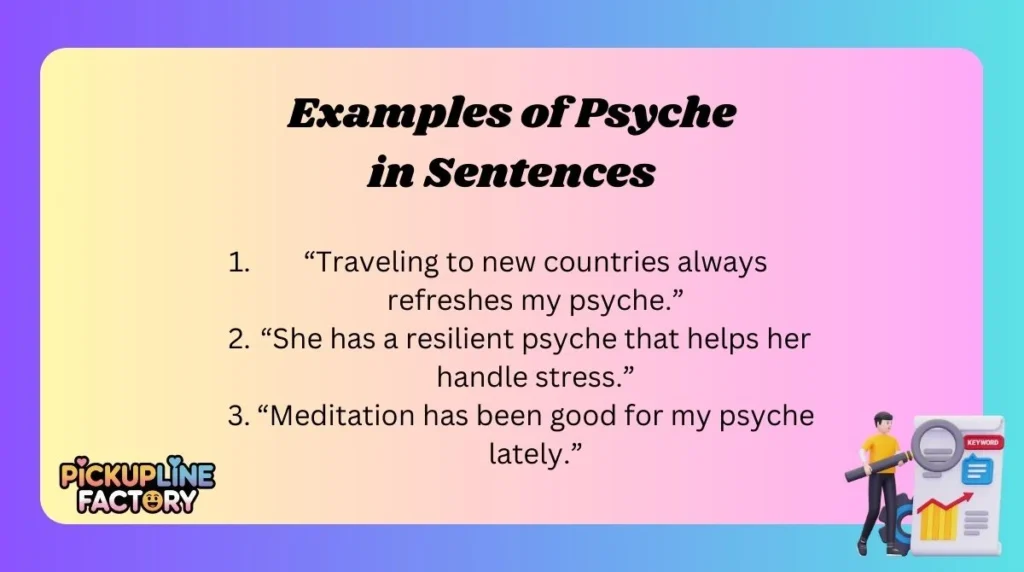
- “Traveling to new countries always refreshes my psyche.”
- “She has a resilient psyche that helps her handle stress.”
- “Meditation has been good for my psyche lately.”
- “The horror movie left a mark on my psyche.”
- “Exploring philosophy challenges the human psyche.”
- “Positive self-talk strengthens the psyche.”
- “Art therapy helps children express their psyche creatively.”
- “His psyche is complex, filled with contradictions and depth.”
Notice how versatile the term is—it fits both casual and serious contexts.
Why Understanding Psyche Matters Today
In modern life, understanding the psyche is more important than ever. With constant social media exposure, work stress, and global challenges, knowing your psyche helps maintain mental health.
It also enhances empathy. Understanding that everyone’s psyche shapes how they perceive the world can make relationships smoother and communication clearer.
Moreover, mental health awareness campaigns today focus on nurturing the psyche through mindfulness, therapy, and self-reflection—reminding us that emotional well-being is essential.
In short, psyche isn’t just a word—it’s a tool for self-awareness, growth, and emotional balance.
Psyche Meaning Medical
In medical and psychological contexts, the word psyche refers to the human mind, including thoughts, emotions, feelings, and mental processes. It is commonly used in psychiatry, psychology, and mental health discussions to describe a person’s inner emotional and mental state. Doctors and therapists often study the psyche to better understand behavior, stress, trauma, anxiety, and emotional well-being.
The term comes from ancient Greek, where it originally meant “soul” or “spirit.” In modern medicine, however, it is more closely connected to mental and emotional functioning rather than spirituality. For example, when someone experiences emotional trauma, experts may say it has affected their psyche, meaning their mental and emotional health has been impacted.
Understanding the psyche is important in treating mental health conditions because emotions and thoughts greatly influence overall well-being. Whether discussing therapy, depression, anxiety, or personality development, the concept of the psyche helps medical professionals explore how the human mind works and responds to life experiences.
Psyche Meaning in Psychology
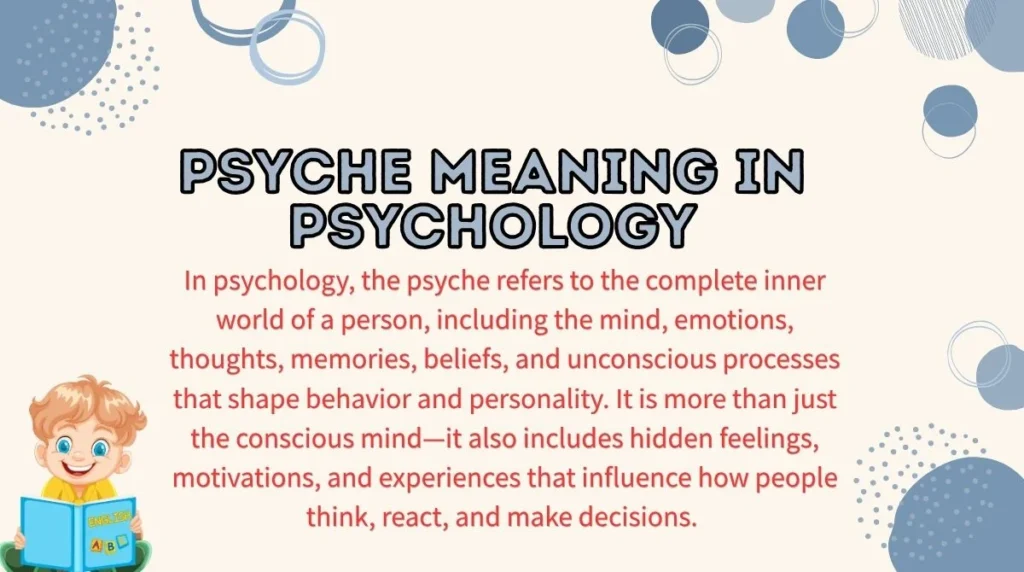
In psychology, the psyche refers to the complete inner world of a person, including the mind, emotions, thoughts, memories, beliefs, and unconscious processes that shape behavior and personality. It is more than just the conscious mind—it also includes hidden feelings, motivations, and experiences that influence how people think, react, and make decisions. Understanding the psyche meaning in psychology helps explain why individuals behave differently in similar situations and how past experiences can affect present emotions. Many psychologists view the psyche as the foundation of mental and emotional well-being because it connects thoughts, feelings, and actions into one unified system. By exploring the psyche, mental health professionals can better understand emotional struggles, personal strengths, and patterns of behavior. Concepts such as self-awareness, emotional regulation, and personal growth are closely linked to the psyche. Whether someone is working through stress, building confidence, or improving relationships, understanding the psyche provides valuable insight into the human mind. In simple terms, the psyche in psychology represents the whole mental and emotional life of a person, making it one of the most important concepts for understanding human behavior and overall psychological health.
Frequently Asked Questions
What does psyche mean in simple words?
It’s your inner self—your mind, emotions, and personality combined.
Is psyche positive or negative?
It’s neutral. Psyche reflects your inner state, which can be positive, negative, or balanced.
Where is psyche commonly used?
In psychology, philosophy, literature, and everyday conversations about emotions or mental health.
Is psyche formal or informal?
It can be both. Scholars, therapists, and writers often use it formally, but casual conversations use it too.
Why do people search for psyche?
People want to understand themselves, improve mental health, or explore concepts of soul and consciousness.
Conclusion
The concept of psyche is more than a word—it’s a gateway into understanding the human mind, emotions, and soul.
By appreciating your psyche, you can navigate challenges, nurture relationships, and live a more mindful life.
Remember, your psyche is your personal compass, guiding you through life’s ups and downs. Take care of it, and it will guide you wisely.

Happy is a passionate content creator and blogger who loves sharing creative ideas, meaningful words, and trending content with readers worldwide.With a simple writing style and fresh perspective, Happy aims to make every article engaging, helpful, and enjoyable to read.