Have you ever signed a petition online or seen one circulating in your community? Maybe you’ve wondered, “What exactly does petition mean?”
In simple terms, a petition is a formal request, usually written, asking someone in authority to take action or make a change.
But it’s much more than a word you see on websites—it’s a tool that empowers people, sparks social movements, and even shapes history.
Whether it’s a local campaign to save a park, a global initiative to protect the environment, or a school project asking for new resources, petitions are everywhere.
Understanding what a petition really means isn’t just about knowing a dictionary definition—it’s about recognizing its role in our society, its history, and how it can influence real change.
In this article, we’ll dive deep into the meaning of petition, explore its origins, show practical examples, clear up common misunderstandings, and explain why knowing this term is more relevant today than ever.
What Does Petition Mean?

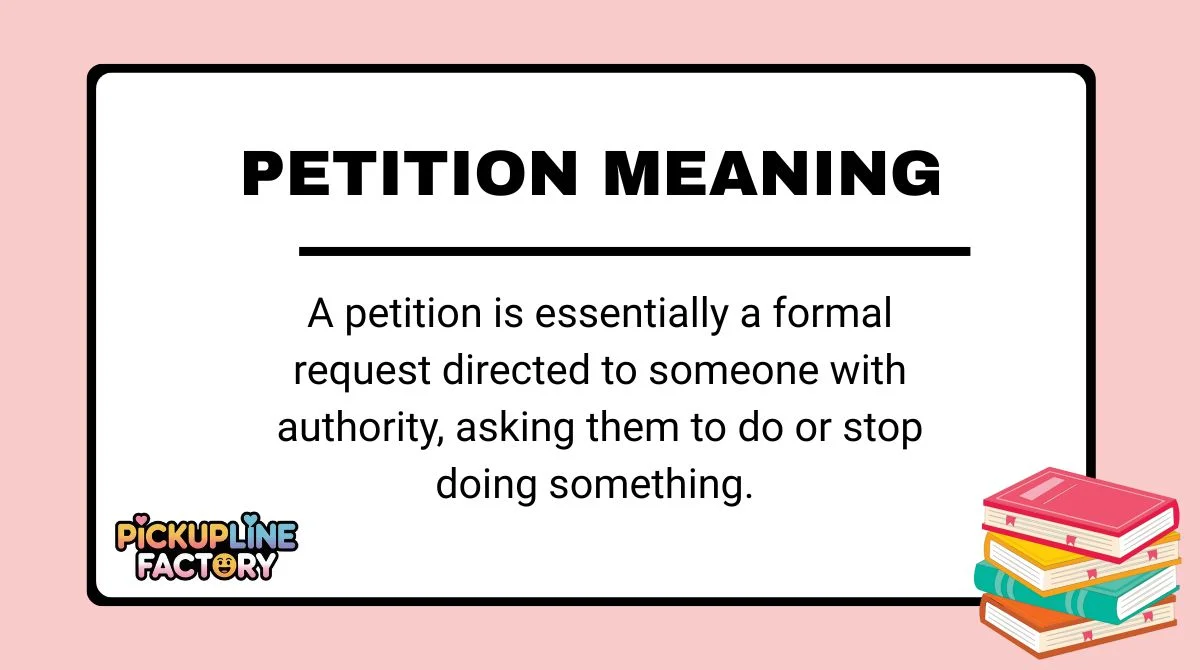
A petition is essentially a formal request directed to someone with authority, asking them to do or stop doing something. While the concept seems straightforward, the real power of a petition lies in the collective voice of people.
Examples in daily life:
- Community Requests: Residents sign a petition asking the city council to fix broken streetlights.
- Online Campaigns: Thousands of people sign a digital petition calling for climate action.
- School Petitions: Students request a change in cafeteria menus or school uniforms.
In all these cases, a petition isn’t just a piece of paper or a web form—it’s a way for individuals to come together, express their concerns, and push for meaningful change.
Origin and Background of the Term
The word “petition” comes from the Latin word petere, which means “to seek” or “to request.” Historically, petitions have been around for centuries. In medieval Europe, citizens would write petitions to kings and nobles to seek justice or ask for favors. These weren’t casual letters—they were serious appeals that could influence laws and policies.
One famous historical example is the Petition of Right in 1628 England, which limited the power of the monarchy and laid the groundwork for modern democracy. This shows that petitions aren’t just modern tools—they have deep roots in shaping societies and giving ordinary people a voice.
Petition Meaning in English
In English, the term petition refers to a formal written request submitted to a person, organization, or authority, usually asking for a specific action or change. It is commonly used in legal, political, and social contexts, where individuals or groups want to express their concerns or demands. For example, citizens may sign a petition to support a new law, or a lawyer may file a petition in court on behalf of a client. The word can also be used as a verb, meaning to make such a request formally. Understanding the meaning of petition in English is important because it reflects how people communicate their needs and influence decisions in an organized way. It emphasizes structure, respect, and clarity when addressing authority. Whether used in everyday conversation or professional writing, petition remains a powerful term that represents collective voice, rights, and the ability to seek change through proper channels.
How Petition Is Used in Daily Life
Petitions show up in all areas of life. Here are some practical examples:
- Local Governance: Petitioning your city council to improve public transportation.
- Workplace Change: Employees petitioning management for flexible hours or better conditions.
- School Projects: Students request new clubs or programs through petitions.
- Environmental Causes: Citizens petition for bans on single-use plastics or deforestation.
- Online Activism: Social media petitions supporting social justice or human rights.
- Consumer Advocacy: Customers petitioning a company to change unfair policies.
These examples show that petitions aren’t just for big political movements—they’re everyday tools for problem-solving and community engagement.
Emotional or Practical Meaning of Petition
Beyond the formal definition, petitions carry emotional weight. They are a symbol of hope, unity, and determination. People sign petitions because they care—they feel strongly about an issue and want their voice heard.
In modern society, petitions also have practical significance. They can influence government decisions, corporate policies, and community outcomes. Signing a petition isn’t just symbolic—it’s an actionable way to participate in change.
Similar or Related Terms
- Appeal: A request for reconsideration or support, often in legal contexts.
- Request: A general act of asking, less formal than a petition.
- Plea: An urgent or emotional request, often personal.
- Campaign: A broader effort that may include petitions but also involves other advocacy methods.
Each term has its nuance, but a petition is unique because it combines formality, collectivity, and the intent to influence authority.
Common Misunderstandings About Petition
- Petitions are only for politics. – Wrong! They’re used in schools, workplaces, and communities.
- Signing a petition has no impact. – False! Petitions can spark awareness and push decision-makers to act.
- You need thousands of signatures for it to matter. – Even a small petition can create change, especially locally.
- Petitions are legally binding. – Not always; many are symbolic, but they still influence decisions.
- Only adults can create or sign petitions. – Teens and even children can participate in age-appropriate ways.
Understanding these clarifications helps people use petitions effectively and avoid misconceptions.
Examples of Petition in Sentences
- The community started a petition to save the old library.
- Thousands signed an online petition to ban plastic bags.
- Our class created a petition for longer recess.
- The citizens submitted a petition demanding cleaner streets.
- I signed a petition to improve local healthcare services.
- Environmentalists circulated a petition to protect endangered species.
- The workers launched a petition for safer working conditions.
- Students organized a petition to bring more clubs to school.
Why Understanding Petition Matters Today
In the age of social media and global connectivity, petitions have more power than ever. They allow ordinary people to influence major issues, from environmental conservation to social justice. Understanding the meaning of petition helps you recognize how collective action works, how democracy functions, and how individuals can make a difference.
In short, knowing what a petition is and how it works is a step toward becoming a more engaged, informed, and proactive citizen.
Petition Meaning Synonyms
The word petition is commonly used to describe a formal request made to an authority, but it also has several useful synonyms that can fit different contexts. Depending on how it’s used, petition can be replaced with words like request, appeal, plea, application, or demand. For example, in legal or official situations, “application” or “appeal” often works better, while in emotional contexts, “plea” may sound more appropriate. Understanding these synonyms helps improve both your vocabulary and communication skills, especially in writing. It also allows you to avoid repetition and choose the most suitable word based on tone and purpose. Whether you’re writing an essay, preparing legal documents, or simply trying to express a formal request more clearly, knowing the alternatives to petition can make your message stronger and more precise. Each synonym carries a slightly different nuance, so selecting the right one depends on the situation and the level of formality required.
Petition Meaning in Law
A petition in law is a formal written request submitted to a court, government authority, or other legal body asking for a specific legal action, decision, or remedy. Unlike a casual request, a legal petition follows established rules and procedures and must clearly explain the facts, legal grounds, and the relief the petitioner is seeking. A person or organization that files the petition is known as the petitioner, while the party responding to it is often called the respondent. Petitions are commonly used in civil, family, constitutional, immigration, and administrative cases. For example, someone may file a petition for divorce, child custody, probate, name change, or judicial review of a government decision. Courts examine the information and supporting evidence before deciding whether to grant, reject, or schedule a hearing for the petition. Understanding the petition meaning in law is important because it highlights one of the primary ways individuals exercise their legal rights and seek justice through the legal system. Whether filed by an individual, business, or organization, a petition serves as an official method of presenting a legal issue and requesting a lawful resolution in accordance with the applicable laws and court procedures.
Frequently Asked Questions
What does petition mean in simple words?
A petition is a written request asking someone in authority to take action or make a change.
Is petition positive or negative?
Petitions are generally positive, as they aim to bring about improvement or justice.
Where is petition commonly used?
In government, schools, workplaces, online campaigns, and community initiatives.
Is petition formal or informal?
Petitions are formal by nature, though they can be created in both official and casual contexts.
Why do people search for petition meaning?
People search to understand its purpose, impact, and proper usage, especially when signing or creating one.
Conclusion
A petition is far more than just a form or signature—it’s a powerful tool for change, a symbol of collective voice, and a way for ordinary people to influence decisions that matter.
From historic milestones to everyday community actions, petitions show that every voice counts.
So the next time you see a petition, remember: your signature isn’t just ink on paper or a click online—it’s a step toward making a difference.
Believe in the power of your voice—it can change the world, one petition at a time.

Happy is a passionate content creator and blogger who loves sharing creative ideas, meaningful words, and trending content with readers worldwide.With a simple writing style and fresh perspective, Happy aims to make every article engaging, helpful, and enjoyable to read.