Have you ever come across the term “DAW” and wondered what it really means? Maybe you saw it in a music forum, a social media post, or even in casual conversation, and it left you scratching your head.
Don’t worry—you’re not alone. DAW is more than just an acronym; it’s a term that has practical, cultural, and emotional significance in today’s world.
Understanding it can not only clarify conversations but also help you connect better with modern language trends.
In this article, we’ll break down DAW meaning in simple, human-friendly terms.
We’ll explore its origins, how it’s used in daily life, common misconceptions, and why knowing this word matters today.
By the end, you’ll have a full understanding of DAW, along with examples you can start using immediately. Let’s dive in and make this term part of your everyday vocabulary!
What Does DAW Mean?
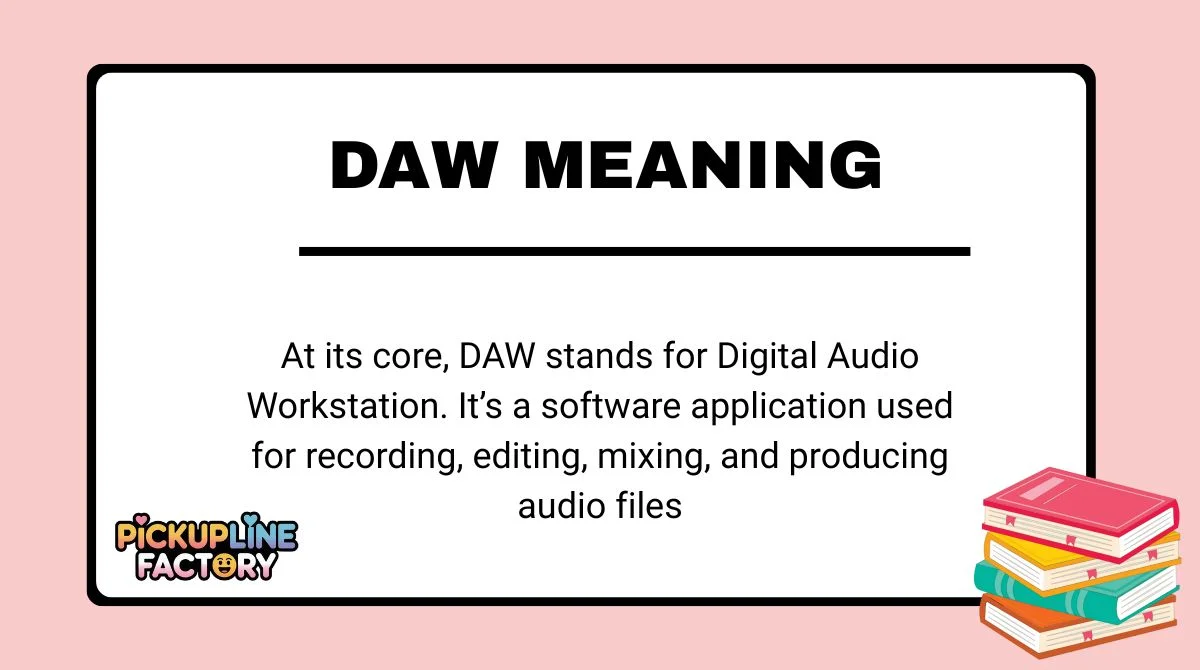
At its core, DAW stands for Digital Audio Workstation. It’s a software application used for recording, editing, mixing, and producing audio files. Musicians, podcasters, sound engineers, and creators of all kinds rely on DAWs to bring their ideas to life.
Think of a DAW as a digital studio in your computer. Instead of needing a physical studio with dozens of gadgets, a DAW lets you record vocals, play instruments, add effects, and create professional-quality music—all in one place.
Real-life examples:
- A bedroom musician uses FL Studio (a popular DAW) to produce beats for YouTube.
- A podcaster records multiple voices, edits out mistakes, and adds background music using Audacity or GarageBand.
- A film editor uses a DAW to mix dialogue, sound effects, and music for a short movie.
In short, if you want to create or manipulate sound digitally, a DAW is your best friend.
Origin and Background of the Term
The term DAW has its roots in the evolution of music technology. Back in the 1980s, digital recording was still in its infancy. Musicians had to rely on tape machines, mixing boards, and bulky equipment. The introduction of personal computers changed everything. Software began to replace hardware, allowing full studios to exist virtually.
By the 1990s, companies like Steinberg, Avid, and Propellerhead developed early DAWs, giving creators the ability to record, edit, and produce music entirely on a computer. Over the years, DAWs have become more accessible and powerful, transforming the music industry and even the way we think about sound.
Imagine a small garage band in the 80s recording on tape. Now, picture them using a laptop with a DAW—they could produce a hit album without leaving home. That’s the power of DAWs.
How DAW Is Used in Daily Life
You might think DAWs are only for professional musicians, but their applications extend far beyond that. Here are some practical ways DAWs show up in everyday life:
- Creating music at home – Hobbyists can compose full songs without expensive studio equipment.
- Podcast production – Editing interviews, adding music, and cleaning up audio.
- Video content creation – YouTubers use DAWs to enhance audio quality and add effects.
- Sound design – Gamers and filmmakers create immersive soundscapes for digital media.
- Live streaming – Streamers mix background music and voiceovers in real time.
- Educational purposes – Teachers and students use DAWs to explore music theory and audio engineering.
The versatility of DAWs makes them invaluable, whether you’re a professional or just exploring your creative side.
Emotional or Practical Meaning of DAW
Beyond its technical definition, DAW carries an emotional and practical significance. For many creators, a DAW is a canvas. It’s where ideas transform into something tangible. It symbolizes creativity, independence, and innovation.
Culturally, DAWs democratized music and content creation. No longer do you need a record label or studio access to make a song. Anyone with a laptop and a DAW can produce, share, and even monetize their work. That’s empowering for artists everywhere.
Similar or Related Terms
If you’re new to DAWs, you might also encounter related terms:
- MIDI (Musical Instrument Digital Interface) – A language DAWs use to communicate with instruments.
- Plugin – Software add-ons that add effects or instruments to your DAW.
- Multitrack Recording – Recording multiple audio tracks simultaneously.
- Mixing – Combining tracks and adjusting levels for a polished sound.
- Mastering – Finalizing audio for distribution with professional quality.
These terms often appear alongside DAWs, and understanding them helps you navigate the digital audio world more confidently.
Common Misunderstandings About DAW
- “DAWs are only for musicians.”
Not true! Podcasters, filmmakers, and educators use DAWs daily. - “DAWs are too complicated to learn.”
While there’s a learning curve, beginner-friendly DAWs like GarageBand are intuitive. - “You need expensive equipment.”
Many DAWs work perfectly with a laptop and a basic microphone. - “DAWs replace creativity.”
Actually, DAWs enhance creativity, allowing more experimentation. - “DAWs are only for Windows or Mac.”
Some DAWs, like FL Studio Mobile, work on phones and tablets. - “DAWs are outdated technology.”
On the contrary, they evolve constantly and remain industry-standard tools.
Examples of DAW in Sentences
- “I spent all night mixing my new track in my DAW.”
- “GarageBand is a beginner-friendly DAW that’s perfect for starting out.”
- “The podcast editor fixed the audio issues using a DAW.”
- “With a good DAW, you can produce professional music from your bedroom.”
- “She learned to compose music by experimenting with her DAW.”
- “Film soundtracks are often created entirely within a DAW.”
- “He added virtual instruments to his song using DAW plugins.”
- “DAWs make collaboration easy, even if the artists are miles apart.”
Why Understanding DAW Matters Today
In 2026, digital content is everywhere. Music, podcasts, videos, and games all rely on high-quality audio. Knowing what a DAW is—and how it functions—gives you insight into how creative content is made. It can inspire you to explore your own creativity, make professional-quality work, or even pursue a career in digital media. DAWs are more than software—they’re a bridge to endless creative possibilities.
Frequently Asked Questions
What does DAW mean in simple words?
DAW means Digital Audio Workstation, a software program used to create, edit, and produce audio digitally.
Is DAW positive or negative?
DAW is neutral, but it has a positive connotation for creativity and innovation.
Where is DAW commonly used?
In music production, podcasting, video editing, and sound design.
Is DAW formal or informal?
DAW is mostly technical or professional, but casual users also refer to it in everyday conversation.
Why do people search for DAW?
People search for DAWs to learn music production, edit podcasts, or explore creative tools.
Conclusion
Understanding the meaning of DAW is more than just a dictionary lookup—it opens a world of creative opportunities.
Whether you’re composing music, editing a podcast, or exploring digital sound, DAWs empower you to bring your ideas to life.
Embrace the possibilities, experiment boldly, and let your creativity flourish. Remember, every masterpiece starts with a single click in your DAW. 🌟

Happy is a passionate content creator and blogger who loves sharing creative ideas, meaningful words, and trending content with readers worldwide.With a simple writing style and fresh perspective, Happy aims to make every article engaging, helpful, and enjoyable to read.