When you first see a bonsai tree, it might seem like just a tiny, decorative plant on a shelf. But there’s so much more hidden in its delicate branches, intricate leaves, and carefully pruned roots.
Bonsai isn’t just gardening—it’s a philosophy, an art form, and a way to connect with nature in miniature. Understanding the bonsai meaning opens the door to centuries of culture, mindfulness, and aesthetic appreciation.
In simple terms, bonsai refers to the practice of growing small trees in pots or containers, meticulously shaped to look like fully grown trees in nature.
But its significance goes beyond size; bonsai embodies patience, care, and harmony. Learning about bonsai isn’t just for gardeners—it’s for anyone interested in art, culture, or even personal growth.
By exploring the origin, daily use, and emotional significance of bonsai, you’ll see why these miniature trees have captured hearts around the world.
What Does Bonsai Mean? 🌿
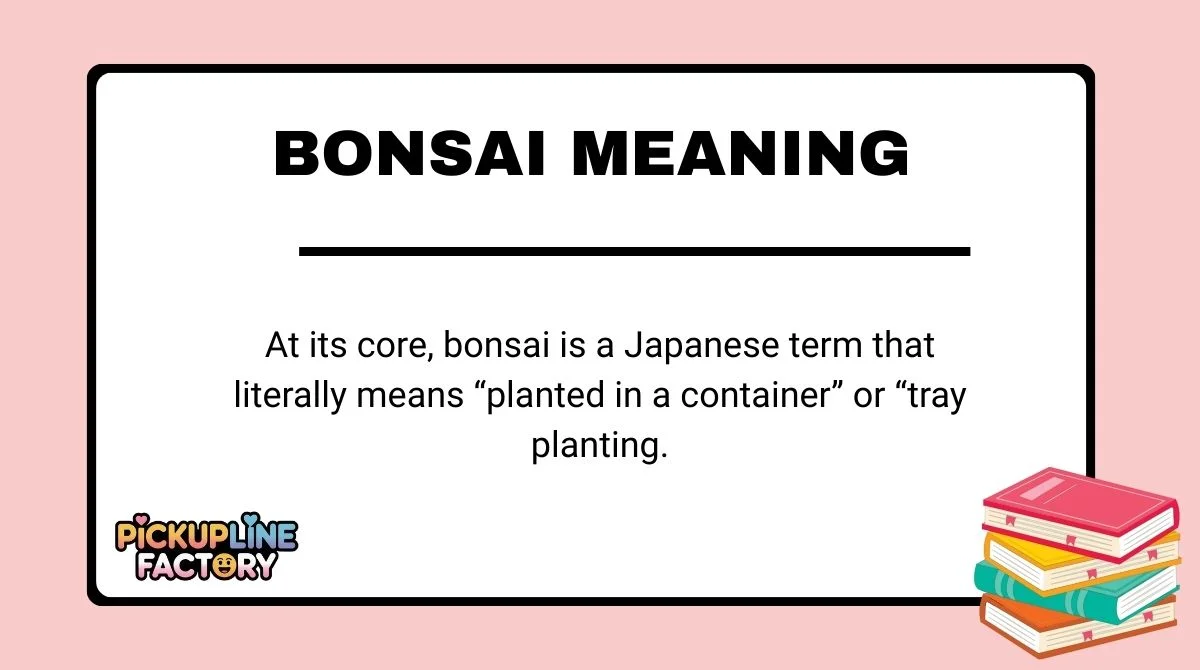
At its core, bonsai is a Japanese term that literally means “planted in a container” or “tray planting.” Unlike ordinary potted plants, bonsai trees are shaped with purpose, often mimicking nature’s grandeur in miniature form. The word combines two Japanese words: bon (tray or pot) and sai (planting).
But bonsai isn’t just about the physical tree—it’s about intention and mindfulness. Every curve, branch, and leaf placement has meaning. For example:
- Example 1: A bonsai shaped to look windswept can symbolize resilience against life’s storms.
- Example 2: A bonsai with multiple trunks might represent family, community, or interconnectedness.
- Example 3: A bonsai displayed on a desk can remind its owner to pause and appreciate patience and growth.
In everyday life, bonsai serves as a living metaphor for discipline, patience, and beauty in small forms. It’s both decorative and philosophical.
Origin and Background of the Term 🏯
The story of bonsai stretches back over a thousand years, tracing its roots to ancient China, where it began as penjing—miniature landscapes in trays. Chinese scholars and monks prized penjing for its spiritual symbolism and artistic expression.
When the practice reached Japan around the 6th century, it evolved into what we now recognize as bonsai. Japanese culture added its own emphasis on simplicity, balance, and harmony with nature. The trees became smaller, more refined, and highly stylized.
Imagine a Japanese monk carefully shaping a tiny pine tree centuries ago, pruning each branch with patience while meditating on life’s impermanence. This is more than horticulture—it’s art, philosophy, and meditation rolled into one. Over the years, bonsai became a symbol of culture, wisdom, and the delicate balance between humans and nature.
How Bonsai Is Used in Daily Life 🌞
Bonsai trees aren’t just for museums—they have practical and aesthetic applications in everyday life:
- Home decoration: A small bonsai on a windowsill adds elegance and a calming vibe to your home.
- Office desk companion: Keeps stress in check and reminds you to slow down in a fast-paced environment.
- Meditation and mindfulness: Caring for a bonsai encourages patience, focus, and reflection.
- Gifts: Bonsai trees are often given as meaningful gifts, symbolizing harmony and good fortune.
- Educational tools: Children and students learn about nature, growth cycles, and responsibility through bonsai.
- Cultural expression: Bonsai in restaurants, tea houses, and art exhibits adds a cultural touch and aesthetic depth.
Even without being a gardener, simply observing bonsai can bring calm, inspiration, and a connection to nature into daily life.
Emotional or Practical Meaning of Bonsai 💚
Beyond its beauty, bonsai carries emotional and practical significance.
- Emotional: Bonsai reminds us that growth takes time. Each branch shaped, each leaf pruned is a lesson in patience. It teaches resilience, mindfulness, and the beauty of imperfection.
- Practical: The act of shaping and caring for bonsai improves focus, reduces stress, and encourages long-term thinking.
- Cultural significance: In Japan, bonsai is a symbol of harmony, balance, and respect for nature. Displaying bonsai can show refinement, artistic taste, and an appreciation for subtle beauty.
In modern life, where speed and efficiency dominate, bonsai stands as a gentle reminder to slow down, nurture, and appreciate small things.
Similar or Related Terms 🌱
- Penjing: Chinese version of bonsai, often including miniature landscapes with rocks and water.
- Saikei: Japanese art form similar to bonsai but emphasizing full miniature landscapes, not just trees.
- Ikebana: Japanese flower arranging, shares the bonsai philosophy of harmony and minimalism.
- Topiary: Sculpting larger plants or trees into shapes, less miniature-focused.
- Terrarium: Glass container with plants, similar in concept but not as focused on artistry or tree shaping.
Each of these practices emphasizes nature, design, and mindfulness, but bonsai specifically focuses on miniature trees and meticulous shaping.
Common Misunderstandings About Bonsai ❌
- Bonsai is a separate species of tree.
- False. Any tree or shrub can become bonsai with care.
- Bonsai are always tiny.
- Not exactly—bonsai trees can range from a few inches to several feet. The key is proportion and shape, not absolute size.
- Bonsai grows slowly because it’s unhealthy.
- Incorrect. Bonsai grows slowly because it is carefully pruned and managed. Slow growth is intentional.
- Bonsai is easy.
- Caring for bonsai requires patience, attention, and knowledge. Mistakes can stunt growth or kill the tree.
- Bonsai must be indoors.
- Some bonsai thrive outdoors; placement depends on species and climate.
- Bonsai is purely decorative.
- While beautiful, bonsai also conveys philosophy, culture, and mindfulness.
Understanding these misconceptions helps beginners approach bonsai with realistic expectations and respect for the art.
Examples of Bonsai in Sentences ✨
- I bought a bonsai to add a touch of nature to my desk.
- Caring for my bonsai taught me patience and attention to detail.
- The bonsai on the windowsill looked like a tiny forest in miniature.
- He gave her a bonsai for her birthday, symbolizing growth and harmony.
- She spent hours shaping her bonsai, carefully pruning each branch.
- The art exhibit featured bonsai alongside traditional Japanese paintings.
- Watching my bonsai grow slowly reminds me to appreciate small victories.
- Bonsai isn’t just a plant—it’s a living piece of art and meditation.
Why Understanding Bonsai Matters Today 🌍
In our modern, fast-paced world, bonsai offers more than decoration. It teaches lessons about patience, mindfulness, and harmony with nature. Bonsai connects people across cultures, blending art, philosophy, and horticulture.
It also fosters mental well-being. Scientific studies suggest that caring for plants reduces stress, improves focus, and even promotes a sense of purpose. Bonsai adds an extra layer: it requires intention, creativity, and reflection. By understanding bonsai, we learn to appreciate small, meaningful moments, slow down, and find joy in the journey—not just the destination.
Frequently Asked Questions (FAQs) ❓
What does bonsai mean in simple words?
Bonsai means a small tree grown in a pot, carefully shaped to look like a full-sized tree, symbolizing patience, art, and harmony.
Is bonsai positive or negative?
Bonsai is positive. It represents growth, patience, mindfulness, and appreciation for beauty.
Where is bonsai commonly used?
Bonsai is used in homes, offices, gardens, art exhibits, meditation spaces, and as gifts in Japanese and global culture.
Is bonsai formal or informal?
Bonsai is versatile. It can be part of formal art displays or casual home decor.
Why do people search for bonsai?
People search for bonsai for gardening tips, cultural knowledge, decoration ideas, mindfulness practices, and gifts.
Conclusion 🌟
The meaning of bonsai goes far beyond a small, decorative tree. It represents art, culture, patience, and mindfulness.
Each branch shaped and every leaf pruned tells a story about growth, care, and intentional living. In a world that often moves too fast, bonsai reminds us to slow down, nurture what matters, and appreciate the beauty in the small and subtle.
Remember: life is a lot like bonsai—careful, patient effort creates something beautiful and lasting.