In a world that moves faster than ever, the idea of living by a code might feel a bit old-fashioned. But have you ever stopped to think about the power of discipline, honor, and integrity in everyday life? That’s where bushido comes in.
This Japanese concept isn’t just some ancient samurai relic—it’s a mindset that can guide our decisions, relationships, and even careers today.
At its core, bushido meaning revolves around loyalty, courage, and moral uprightness. It’s about striving to be a better person, even when no one is watching.
Imagine living in a way where your actions consistently reflect your values—that’s the heart of bushido.
In this article, we’ll break it down in a friendly, easy-to-understand way, show you its origins, and explore how you can apply it in daily life.
By the end, you’ll see why understanding bushido isn’t just historical—it’s deeply practical.
What Does Bushido Mean?

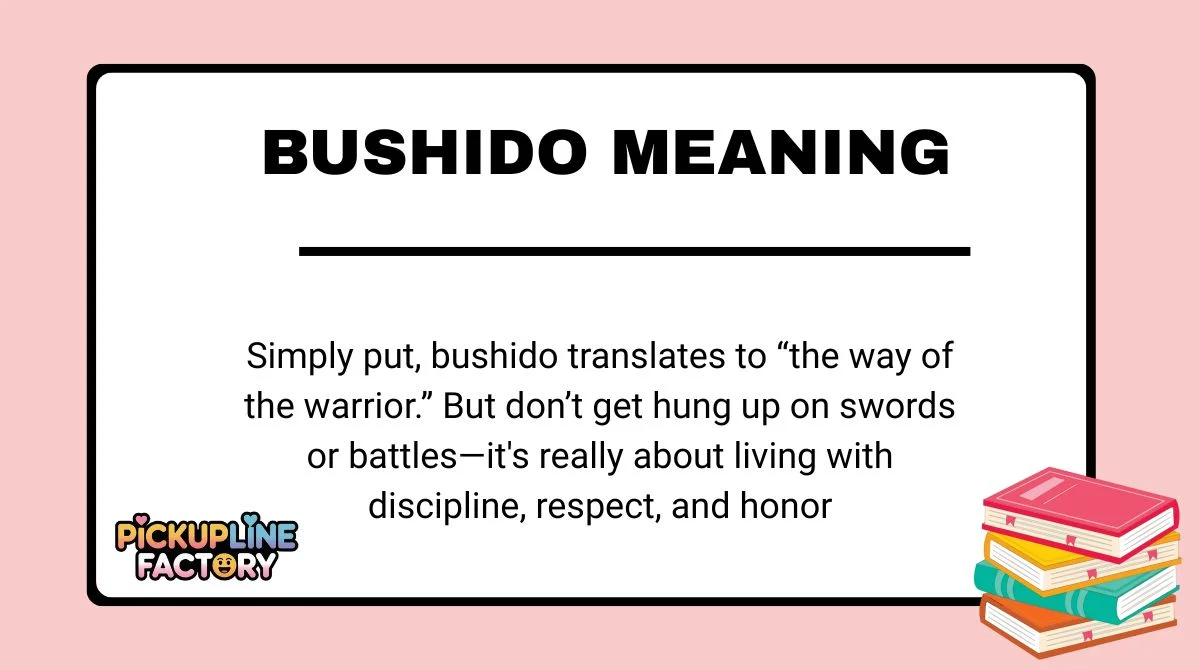
Simply put, bushido translates to “the way of the warrior.” But don’t get hung up on swords or battles—it’s really about living with discipline, respect, and honor. Think of it as a roadmap for ethical living.
Here’s how it appears in real life:
- Loyalty – A samurai’s devotion to their lord was absolute. Today, it can mean staying committed to your family, work, or friends, even when challenges arise.
- Courage – Not just facing physical danger, but having the courage to speak your truth or take responsibility for mistakes.
- Integrity – Being honest in thought, word, and deed. Even small actions, like keeping promises, reflect bushido principles.
In short, bushido is about aligning your actions with your values—making life meaningful beyond personal gain.
Origin and Background of the Term
The story of bushido stretches back centuries to feudal Japan, where samurai warriors upheld a strict moral code. The word itself combines two Japanese words: “bushi” (warrior) and “do” (way or path).
Picture this: a young samurai training from dawn to dusk, not just mastering the sword, but learning poetry, philosophy, and ethics. Bushido wasn’t about brute strength—it was about cultivating a noble character. Loyalty to one’s lord, respect for others, courage in battle, and humility were all essential. Over time, bushido influenced not only military life but Japanese society as a whole, shaping education, business practices, and interpersonal relationships.
How Bushido Is Used in Daily Life
You might think bushido is only for historians or martial artists—but it can guide anyone, anywhere. Here are some practical examples:
- At Work – Staying committed to a team project, even when it’s challenging.
- In Relationships – Showing respect and honesty to friends and loved ones.
- Personal Growth – Facing fears, setting goals, and sticking to them.
- Community Service – Acting selflessly without expecting recognition.
- Decision-Making – Choosing integrity over shortcuts or dishonesty.
The beauty of bushido is that it’s not rigid—it adapts to modern life while keeping its core principles intact.
Emotional or Practical Meaning of Bushido
Bushido isn’t just a set of rules; it’s a way of life. On an emotional level, it brings peace of mind. When you act with honor and courage, guilt and regret lose their power. Practically, bushido fosters trust, respect, and reliability, which are invaluable in both personal and professional life.
For modern readers, bushido can mean taking responsibility for your actions, standing up for others, or simply choosing to be a person of principle. It reminds us that character matters more than convenience.
Similar or Related Terms
- Dao (Tao) – Chinese philosophy emphasizing harmony with the natural way.
- Chivalry – Medieval European code of conduct for knights, focusing on honor and bravery.
- Seishin – Japanese term for spirit or soul; often tied to personal discipline.
- Kamae – Martial readiness, but also a mindset of preparedness in life.
While these terms overlap in emphasizing morality and discipline, bushido uniquely blends ethics, loyalty, and courage with everyday life.
Common Misunderstandings About Bushido
- Bushido is just about fighting – False. It’s more about moral conduct than physical combat.
- It’s outdated – Not really. Its principles still apply to modern life.
- Bushido is rigid – It adapts to personal and social contexts.
- Only men followed bushido – Women, especially samurai wives, also practiced honor and loyalty.
- It promotes aggression – On the contrary, it values self-control and restraint.
Examples of Bushido in Sentences
- She approached the difficult task with bushido, staying calm and principled.
- His loyalty to his team reflected true bushido values.
- In the face of criticism, he acted with courage—a small act of bushido.
- Keeping promises even when inconvenient is modern bushido.
- Treating competitors with respect is an overlooked form of bushido.
- Taking responsibility for mistakes shows everyday bushido in action.
- Practicing patience and humility is part of living by bushido.
- Standing up for someone being treated unfairly is modern bushido.
Why Understanding Bushido Matters Today
In a fast-paced world, the lessons of bushido remind us to pause, reflect, and act with integrity. It’s relevant for leaders, parents, teachers, and anyone striving for personal growth. Beyond individual benefits, adopting bushido principles can strengthen communities by promoting trust, respect, and ethical behavior.
Understanding bushido also gives us a glimpse into Japanese culture and history, enriching our global perspective. It’s not just about knowing history—it’s about applying timeless wisdom to modern challenges.
Frequently Asked Questions
What does bushido mean in simple words?
Bushido means “the way of the warrior,” but more broadly, it’s about living with honor, discipline, and integrity.
Is bushido positive or negative?
It’s positive, encouraging courage, loyalty, and ethical behavior.
Where is bushido commonly used?
Historically in Japan among samurai, but today it applies in workplaces, personal growth, and daily decisions.
Is bushido formal or informal?
It’s formal in origin but can be applied informally in modern life.
Why do people search for bushido?
To understand its historical significance, cultural relevance, and practical lessons for everyday life.
Conclusion
Bushido isn’t just an ancient code; it’s a timeless guide for living with integrity and purpose.
From courage to loyalty, it offers a blueprint for becoming a person others can trust and respect.
By embracing bushido in small daily actions, you can lead a life of meaning, honor, and authenticity. Remember: true strength isn’t just about skill—it’s about character. 🌟