Ever wondered why the word “cranium” sounds so scientific, yet you hear it occasionally in everyday conversations?
Whether it pops up in a medical show, a trivia game, or casual talk about the human body, knowing the cranium meaning can actually make you sound smarter—and more curious about how your own body works.
At its core, the cranium is much more than just a bone. It’s the protective fortress for your brain, housing some of the most vital functions that keep you alive and thinking.
Understanding this term isn’t just about memorizing a definition—it’s about appreciating your body’s design, connecting to historical knowledge, and even enhancing your vocabulary for daily life.
In this article, we’ll explore what cranium means, its origins, practical uses, common misconceptions, and why knowing it is surprisingly useful today. By the end, you’ll not only understand the word—you might even see your own head in a whole new light!
What Does Cranium Mean?
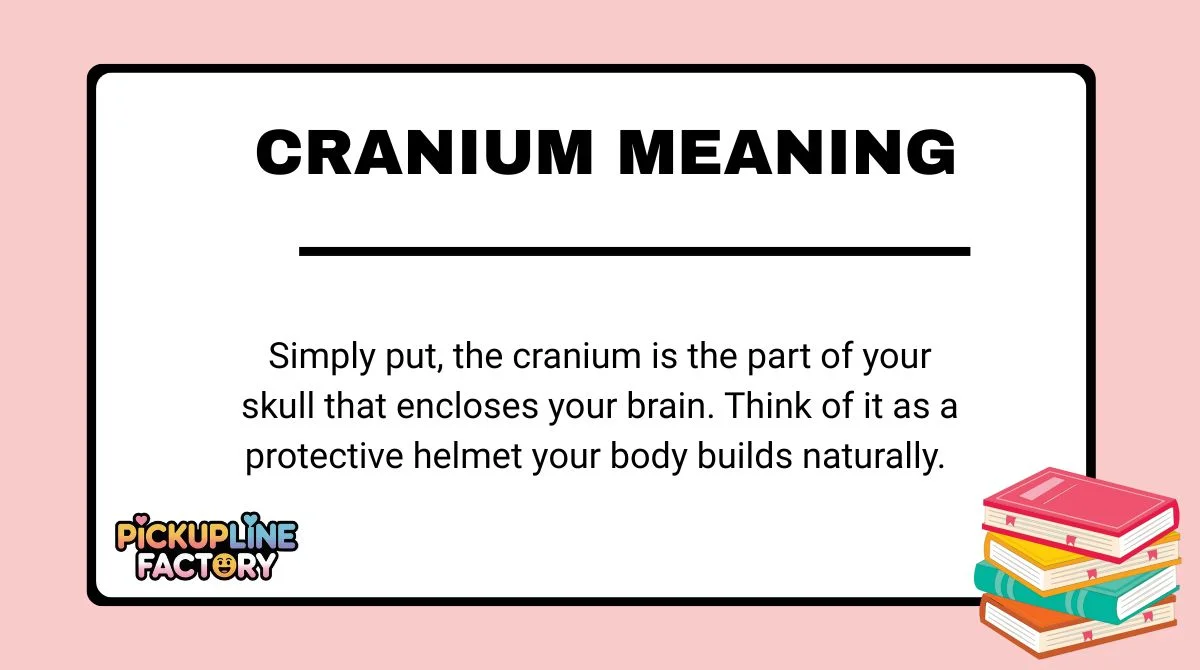
Simply put, the cranium is the part of your skull that encloses your brain. Think of it as a protective helmet your body builds naturally. While people often use “skull” and “cranium” interchangeably, the cranium specifically refers to the upper part of the skull—excluding the jaw.
Examples in real life:
- In biology class, students examine a cranium to learn how bones protect the brain.
- Archaeologists study ancient crania to understand human evolution.
- Doctors discuss the cranium during head injury assessments, focusing on its protective role.
In short, whenever someone mentions your cranium, they’re talking about the brain’s bone casing, not the entire skull structure.
Origin and Background of the Term
The word “cranium” comes from the Greek word kranion, which literally means “skull”. Ancient Greek scholars used it in medical texts and philosophical discussions about the mind and body.
Interestingly, the fascination with the cranium isn’t modern. In the 18th and 19th centuries, scientists practiced phrenology, the study of skull shapes, believing that bumps and contours could indicate personality traits or intelligence. While phrenology is outdated and discredited, it shows how humans have long been intrigued by the cranium.
Even today, the word carries a sense of intellectual sophistication. Saying “cranium” instead of “head” subtly hints at science, medicine, or careful observation—perfect for casual trivia, essays, or even playful banter.
How Cranium Is Used in Daily Life
While it sounds technical, the cranium comes up more often than you might think:
- Medical conversations: Doctors often discuss injuries involving the cranium during X-rays or CT scans.
- Education: Anatomy students label cranium bones like the frontal, parietal, and occipital bones.
- Sports commentary: In contact sports, players might get a helmet to protect the cranium.
- Archaeology: Discovering a cranium helps researchers learn about ancient humans’ health and diet.
- Art: Sculptors use cranium shapes to create realistic portraits or busts.
- Everyday humor: “Use your cranium” is a playful way to tell someone to think.
In each case, the cranium isn’t just a bone—it’s a symbol of protection, thought, and identity.
Emotional or Practical Meaning of Cranium
Beyond biology, the cranium holds emotional significance. In literature and art, it often symbolizes wisdom, intellect, or mortality. For example:
- Skull-shaped art reminds people of life’s fragility.
- Phrases like “empty cranium” humorously critique someone’s thinking skills.
On a practical level, understanding the cranium helps us respect safety gear, like helmets, which literally protect our most precious asset—the brain. In medicine, knowing cranium anatomy saves lives in surgeries and trauma care.
The cranium bridges science and emotion, connecting health, knowledge, and cultural awareness.
Similar or Related Terms
- Skull – Entire bony structure of the head; includes the jaw.
- Frontal bone – The bone forming the forehead part of the cranium.
- Parietal bone – Side and top bones of the cranium.
- Occipital bone – Back of the cranium.
- Jaw (Mandible) – Not part of the cranium but often confused with it.
These terms clarify the difference between general skull structures and the cranium’s specific role.
Common Misunderstandings About Cranium
- Cranium = entire skull – Not exactly; it excludes the jaw.
- Only doctors use it – Actually, anyone can say it correctly.
- It’s useless to know – Understanding cranium anatomy can prevent injuries.
- Cranium is a scary term – Mostly, it’s neutral or intellectual.
- It’s a modern word – Its roots go back to ancient Greek.
- It’s only about bones – It also represents protection, identity, and thought.
Examples of Cranium in Sentences
- The archaeologist carefully examined the cranium to estimate the person’s age.
- After the accident, the doctor checked her cranium for fractures.
- The sculptor studied the cranium to get the portrait just right.
- During the anatomy lecture, we labeled every bone in the cranium.
- Don’t forget to wear a helmet—it protects your cranium!
- He tapped his cranium and laughed, “Guess I should’ve thought faster.”
- The fossilized cranium revealed clues about early human life.
- Phrenologists once believed the cranium could explain personality traits.
Why Understanding Cranium Matters Today
Knowing what a cranium is has practical, cultural, and intellectual value. In medicine, it saves lives. In education, it teaches biology and anatomy. In everyday conversation, it enhances vocabulary and makes your speech sound smarter.
Culturally, the cranium represents thought, wisdom, and human curiosity. Even in art, it’s used as a symbol of life and mortality, reminding us of our shared humanity. Understanding your cranium isn’t just a fact—it’s a bridge between science, history, and personal growth.
Frequently Asked Questions
What does cranium mean in simple words?
It’s the upper part of your skull that houses and protects your brain.
Is cranium positive or negative?
Neutral. It’s a scientific term but can imply intellect or wisdom.
Where is cranium commonly used?
In medical, educational, archaeological, and everyday conversations.
Is cranium formal or informal?
It’s formal in science or education, casual in playful speech like “use your cranium.”
Why do people search for cranium?
To learn anatomy, improve vocabulary, or understand historical and cultural references.
Conclusion
The cranium is more than just a bone—it’s a protector, a symbol of thought, and a bridge between science, culture, and everyday life.
From doctors to students, from artists to curious minds, understanding the cranium enriches your perspective.
So next time you tap your forehead and think, remember: your cranium isn’t just a bone—it’s your personal helmet of wisdom. Embrace it, respect it, and let it inspire curiosity every day.