Ever wondered why some people talk about “time shares” like it’s the ultimate vacation hack? Or why others warn about hidden costs and tricky contracts?
Understanding the time share meaning can save you both money and headaches while helping you enjoy memorable holidays. Simply put, a time share is a way for multiple people to share ownership of a property—usually a vacation home—by splitting the time each person can use it.
This concept might seem confusing at first, but it’s actually quite practical. Imagine having a beachfront condo in Hawaii, but only being able to use it for a couple of weeks every year. Sounds fair, right? That’s the essence of a time share.
Whether you’re considering investing, renting, or just curious, grasping this idea can make your vacation planning smarter, smoother, and stress-free.
Let’s dive deeper into what time share meaning really entails and how it works in real life.
What Does Time Share Mean?
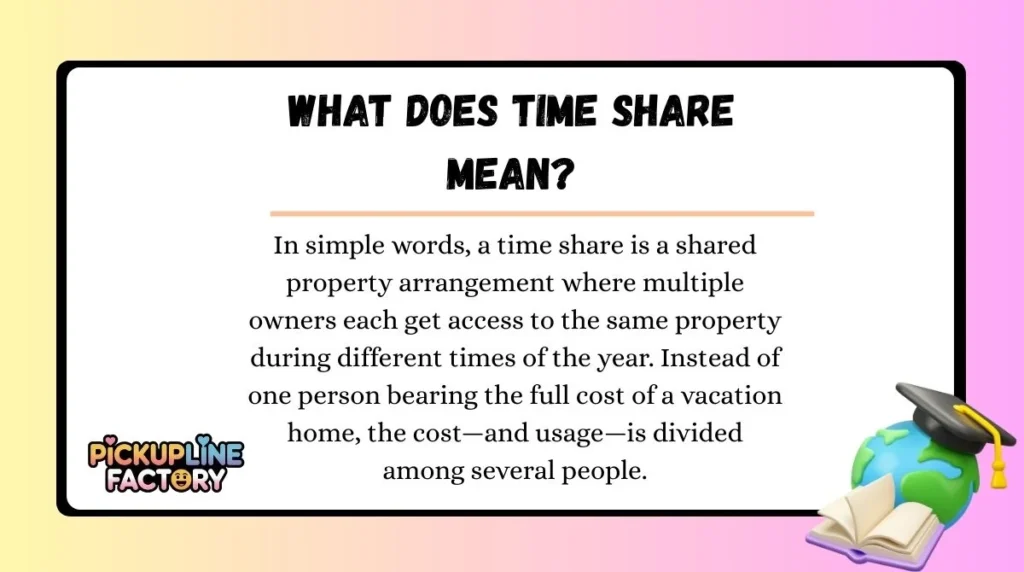
In simple words, a time share is a shared property arrangement where multiple owners each get access to the same property during different times of the year. Instead of one person bearing the full cost of a vacation home, the cost—and usage—is divided among several people.
Examples in real life:
- Beachfront condo: Five families share a condo, each getting one week per year.
- Ski resort cabin: Ten friends purchase a time share, rotating weekends during the winter season.
- Luxury resort apartment: A couple buys a two-week time share, guaranteeing a vacation spot every summer.
Essentially, it’s a smart way to enjoy high-end vacations without owning the property outright.
Origin and Background of the Term
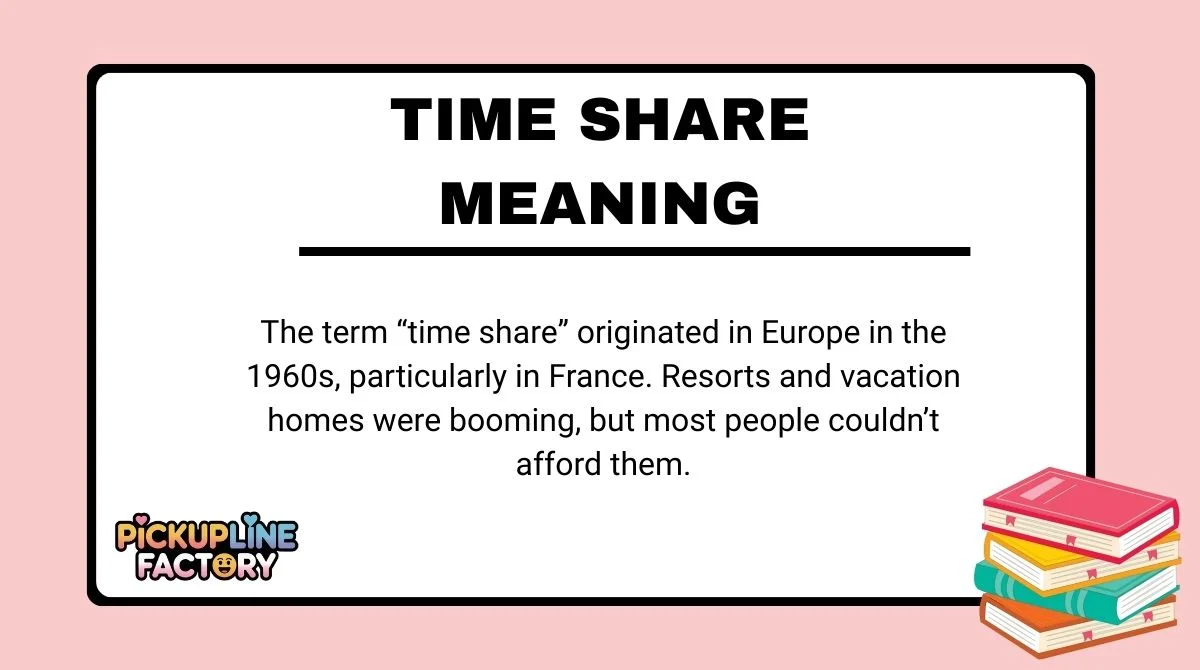
The term “time share” originated in Europe in the 1960s, particularly in France. Resorts and vacation homes were booming, but most people couldn’t afford them. Developers came up with the idea of selling shares of a property’s usage, allowing multiple buyers to enjoy the property at different times.
The concept soon spread to the United States, especially in Florida, where beach resorts offered weekly vacation spots to families. Initially, it was a small, niche idea, but as tourism grew, so did time shares. Today, you’ll find time shares all over the world—from tropical islands to snowy mountain retreats.
How Time Share Is Used in Daily Life
Time shares aren’t just a vacation gimmick—they’re practical tools for planning, saving money, and even investing. Here’s how they show up in everyday life:
- Family vacations: Parents buy a time share to ensure they always have a summer getaway.
- Retirement planning: Some retirees use time shares to travel affordably each year.
- Gifted vacations: Families sometimes gift a week of their time share to relatives or friends.
- Exchange programs: Time share owners can swap their week with another location worldwide.
- Corporate retreats: Companies buy or rent time shares for team getaways.
- Rental income: If you’re not using your week, renting it out can offset costs.
Time shares blend flexibility and convenience, making them more than just a vacation tool—they’re a lifestyle choice.
Emotional or Practical Meaning of Time Share
Beyond logistics, a time share carries emotional significance. Owning a time share often symbolizes stability, tradition, and family bonding. Families return to the same property year after year, creating cherished memories and rituals.
Practically, time shares encourage budget-friendly travel, as splitting costs makes luxury resorts more accessible. They also teach planning and commitment, since you’re often locking in vacation dates years in advance.
For many, a time share is a blend of practicality, tradition, and excitement—a way to ensure vacations happen without last-minute stress.
Similar or Related Terms
- Vacation club: Membership-based access to multiple resorts, often more flexible than traditional time shares.
- Fractional ownership: You own a literal percentage of a property, often with more perks and higher costs.
- Condominium rental: Renting a property temporarily without ownership.
- Hotel points programs: Use points to book stays but don’t own the property.
Difference: Time shares give guaranteed property usage, unlike points programs or rentals.
Common Misunderstandings About Time Share
- It’s free or cheap: Not true—initial cost plus annual fees can be substantial.
- You own the property fully: Ownership is limited to your allotted time.
- It’s only for the rich: Many affordable options exist for middle-income families.
- It’s difficult to sell: Reselling can be tricky, but exchange programs and rentals ease the process.
- You must use it every year: Some time shares allow flexibility to skip or swap weeks.
- It’s outdated: Modern time shares integrate apps, global exchanges, and luxury perks.
Examples of Time Share in Sentences
- We bought a time share in the mountains so our kids can ski every winter.
- Sarah gifted her parents a week in her time share for their anniversary.
- Many families prefer time shares to hotels because of the kitchen and extra space.
- He rented out his time share week to cover the annual maintenance fee.
- The resort offered a time share exchange program, letting us visit Europe instead of Florida.
- Owning a time share gave us a vacation spot without the hassle of booking hotels.
- Their time share ensures they always have a place by the lake during summer.
- She researched the time share meaning before committing to a multi-year contract.
Why Understanding Time Share Matters Today
In today’s fast-paced world, understanding time share meaning can save you money, stress, and disappointment. With rising travel costs, a time share offers predictable vacations at a fraction of the price. It also gives families a chance to create traditions, explore multiple destinations, and avoid last-minute hotel hunting.
Additionally, time shares are evolving. Digital management, global exchanges, and flexible memberships mean they’re not just for “old-school” vacationers—they’re for anyone who values smart travel planning.
Frequently Asked Questions
What does time share mean in simple words?
It means you share a property with others, each having access during different times of the year.
Is time share positive or negative?
It depends on your goals. Time shares are great for planned vacations but can be costly if mismanaged.
Where is time share commonly used?
Resorts, beach condos, ski cabins, and even urban apartments for holiday use.
Is time share formal or informal?
It’s a formal ownership arrangement, but using it is casual and vacation-friendly.
Why do people search for time share?
To understand costs, ownership benefits, rental opportunities, or vacation planning options.
Conclusion
Understanding time share meaning is more than just knowing a definition—it’s about recognizing how shared ownership can enhance vacations, create memories, and save money.
Whether you’re planning family trips, retirement adventures, or exploring new destinations, time shares offer a practical and emotional benefit.
Remember, a well-chosen time share isn’t just a property—it’s a ticket to experiences, tradition, and joy that you can treasure for years.