Have you ever heard someone referred to as an octogenarian and wondered what that really meant? Maybe it was a grandparent, a neighbor, or a famous public figure.
The term can sound fancy or even a little intimidating at first, but it’s actually simple and full of meaning.
Understanding words like octogenarian doesn’t just boost your vocabulary—it helps you connect with stories of life, experience, and wisdom.
In everyday conversations, people often throw around terms related to age without really knowing their origin or nuances.
But knowing that someone is an octogenarian gives a deeper insight into their life stage, experiences, and perspectives.
It’s more than a number; it’s a recognition of decades lived, lessons learned, and histories witnessed.
By the end of this article, you’ll not only know the definition of octogenarian but also understand its background, practical usage, and emotional significance in everyday life.
Plus, we’ll explore some common misconceptions and examples to make it all crystal clear. Let’s dive in!
What Does Octogenarian Mean?

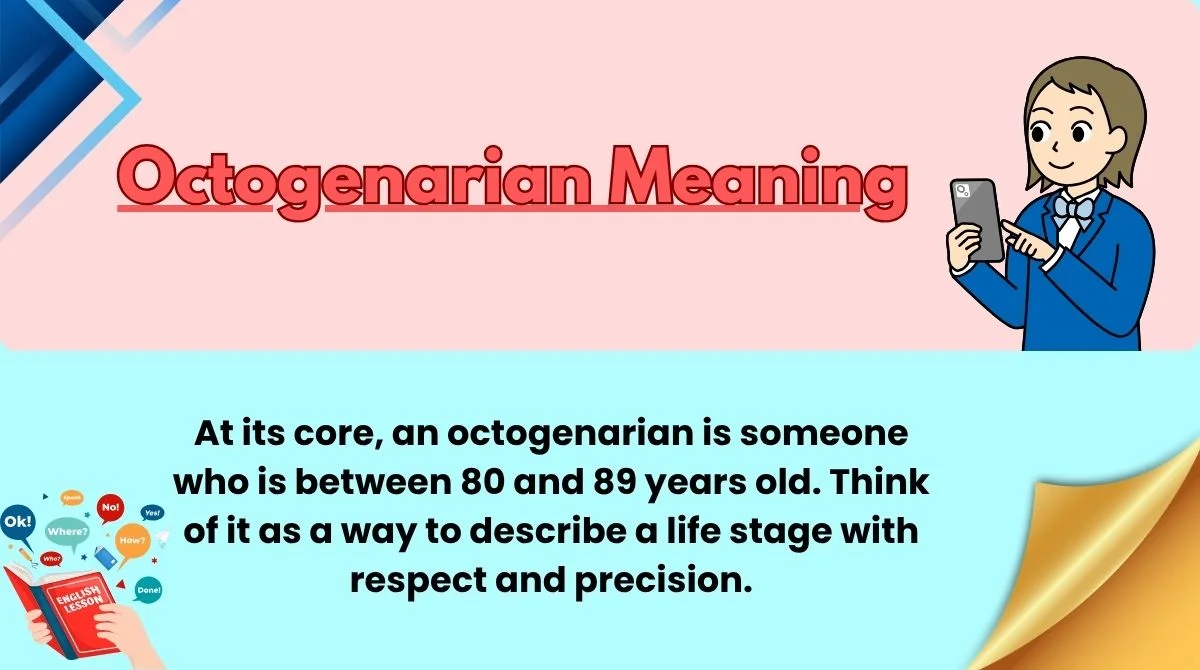
At its core, an octogenarian is someone who is between 80 and 89 years old. Think of it as a way to describe a life stage with respect and precision. Instead of saying, “She’s old,” which can feel vague or harsh, saying, “She’s an octogenarian” is specific and dignified.
Here are a few everyday examples:
- Grandma just turned 82, making her a proud octogenarian.
- The local library invited a panel of octogenarians to share life lessons.
- Many octogenarians stay active in their communities, proving age is just a number.
It’s simple, respectful, and carries a subtle sense of admiration for the decades someone has lived.
Origin and Background of the Term
The word “octogenarian” comes from Latin roots: octo, meaning “eight,” and the suffix -genarian, which relates to age groups. Essentially, it’s a formal way to describe someone in their eighth decade of life.
Historically, reaching your 80s was a remarkable milestone. In medieval Europe, very few people lived that long due to disease, limited medical care, and harsh living conditions. So, octogenarians were seen as keepers of wisdom, storytellers, and sources of guidance. Even today, the term carries a subtle respect for the longevity and experience someone has achieved.
Fun fact: The term became more commonly used in English around the 18th century when documenting census records and social milestones required precise age categories.
Octogenarian Meaning in English
The octogenarian meaning in English is a person who is between 80 and 89 years old. It is a respectful and precise word used to describe someone in their eighties instead of simply saying they are elderly or old. The term comes from the Latin word “octo,” meaning eight, combined with “-genarian,” which refers to an age group. In modern English, the word is commonly used in newspapers, books, healthcare, biographies, and everyday conversations. For example, you could say, “The octogenarian author published her latest novel at the age of 84,” or “Despite being an octogenarian, she remains active and independent.” Using this word adds clarity and professionalism to your writing while showing respect for older adults. As people continue to live longer, the term octogenarian has become increasingly common when discussing aging, longevity, and life achievements. Understanding its meaning helps improve your English vocabulary and allows you to communicate more accurately when talking about people in their eighties.
How Octogenarian Is Used in Daily Life
You might think “octogenarian” is only for formal writing, but it can fit naturally into conversations too. Here are some practical ways it appears:
- Talking about a family member: “My grandpa is an octogenarian, but he still plays chess every morning.”
- In news articles: “The octogenarian marathon runner amazed the crowd with her stamina.”
- Healthcare contexts: Doctors often reference age groups like octogenarians for medical guidelines.
- Community recognition: “The city honored its octogenarian volunteers for decades of service.”
- Casual conversations: “Did you meet Mrs. Thompson? She’s an octogenarian and still runs a local charity!”
Notice how the term is friendly, precise, and respectful, whether used formally or informally.
Octogenarian Pronunciation
The word octogenarian is pronounced:
octogenarian (ok-toh-juh-NAIR-ee-un)
Simple breakdown:
ok-toh-juh-NAIR-ee-un
The main stress falls on “NAIR”.
Example:
“She became an octogenarian after turning 80.”
Emotional or Practical Meaning of Octogenarian
Being an octogenarian isn’t just about hitting a number; it reflects life’s journey, challenges, and achievements. For many, it’s a time of reflection, legacy-building, and enjoying the fruits of decades of work.
Culturally, octogenarians are often viewed as sources of wisdom and history. In some societies, elders are celebrated and revered for their guidance. Recognizing someone as an octogenarian is a small but meaningful way to honor their experience and contributions.
Similar or Related Terms
- Nonagenarian – someone in their 90s
- Septuagenarian – someone in their 70s
- Centenarian – someone who is 100 or older
Each term has its own nuance, but “octogenarian” is specific to the 80–89 age range and often conveys a sense of respect.
Common Misunderstandings About Octogenarian
- Misconception 1: It means someone is very old or frail.
Clarification: Many octogenarians are healthy, active, and vibrant. Age doesn’t define capability. - Misconception 2: It’s a formal term only for writing.
Clarification: It works in speech too, especially when showing respect. - Misconception 3: It implies negativity.
Clarification: It’s neutral or positive, recognizing longevity and life experience. - Misconception 4: Only used for people, not pets or fictional characters.
Clarification: Technically, it can describe any entity in its eighth decade. - Misconception 5: You have to be exactly 80.
Clarification: It covers the full 80–89 range.
Examples of Octogenarian in Sentences
- The octogenarian chef still creates recipes that wow younger generations.
- An octogenarian volunteer helped organize the local festival for over 30 years.
- Even as an octogenarian, she enjoys hiking every weekend.
- The town held a special celebration for its octogenarian residents.
- He became an octogenarian last month, surrounded by family and friends.
- The octogenarian author published her memoir, inspiring readers of all ages.
- Local schools invited an octogenarian speaker to share historical stories.
- Watching octogenarians excel in sports is truly motivating.
Why Understanding Octogenarian Matters Today
In our fast-paced world, age often gets overlooked. But understanding terms like octogenarian helps us appreciate the stages of life, connect across generations, and learn from those who came before us. From education to healthcare to storytelling, knowing age-related terminology allows for more respectful, accurate, and empathetic communication.
Plus, as populations live longer, octogenarians are increasingly part of communities, workplaces, and families. Recognizing their presence and contributions is not just polite—it’s necessary.
Octogenarian Pronunciation

octogenarian (ok-toh-jen-AIR-ee-un)
The pronunciation of octogenarian is “ok-toh-jen-AIR-ee-un.” Although the word may seem difficult at first glance, it becomes much easier once you break it into syllables: oc-to-ge-nar-i-an. Stress is placed on the “AIR” syllable, making it flow naturally when spoken. You’ll often hear this word in English conversations, news reports, documentaries, healthcare discussions, and educational settings when referring to someone who is between 80 and 89 years old. Learning the correct pronunciation helps you speak more confidently and use the word naturally in both formal and casual conversations. For example, you might say, “My grandfather is an octogenarian, but he still enjoys traveling.” Listening to native English speakers and repeating the word aloud a few times is one of the best ways to master its pronunciation. Once you become familiar with it, octogenarian is a useful and respectful term that can easily become part of your everyday English vocabulary.
Frequently Asked Questions
What does octogenarian mean in simple words?
It simply means someone who is between 80 and 89 years old.
Is octogenarian positive or negative?
It’s neutral to positive. It shows respect and acknowledges life experience.
Where is octogenarian commonly used?
It appears in everyday speech, news articles, healthcare, and formal writing.
Is octogenarian formal or informal?
It can be both. Formal in writing, conversational in speech.
Why do people search for octogenarian?
People want clarity on the age range, respectful ways to describe older adults, or examples in sentences.
Conclusion
Being an octogenarian is more than just a number; it’s a testament to resilience, experience, and wisdom.
Recognizing this life stage with the right words shows respect, understanding, and admiration.
Next time you meet someone in their eighties, remember: you’re not just talking about age—you’re celebrating decades of life, stories, and lessons.
Every octogenarian is a living library of memories and inspiration. 🌟

Happy is a passionate content creator and blogger who loves sharing creative ideas, meaningful words, and trending content with readers worldwide.With a simple writing style and fresh perspective, Happy aims to make every article engaging, helpful, and enjoyable to read.