If you’ve ever received a message that says “YHU” instead of “you,” you probably paused for a second and wondered what it meant.
Don’t worry—you’re not alone. Internet slang evolves quickly, and new abbreviations or creative spellings appear almost every day. What seems confusing today can become part of everyday online conversations tomorrow.
So, what does YHU mean in text? Simply put, YHU is an alternative spelling of the word “you.” People often use it in text messages, social media posts, and online chats to make their messages feel more expressive, stylish, or personal. While it isn’t standard English, it’s widely recognized in many online communities.
Understanding terms like YHU helps you communicate more confidently in today’s digital world. Whether you’re chatting with friends, scrolling through social media, or trying to understand internet slang, knowing what YHU means can save you from unnecessary confusion. Let’s explore where this term came from, how people use it, and why it continues to appear in online conversations.
What Does YHU Mean in Text?
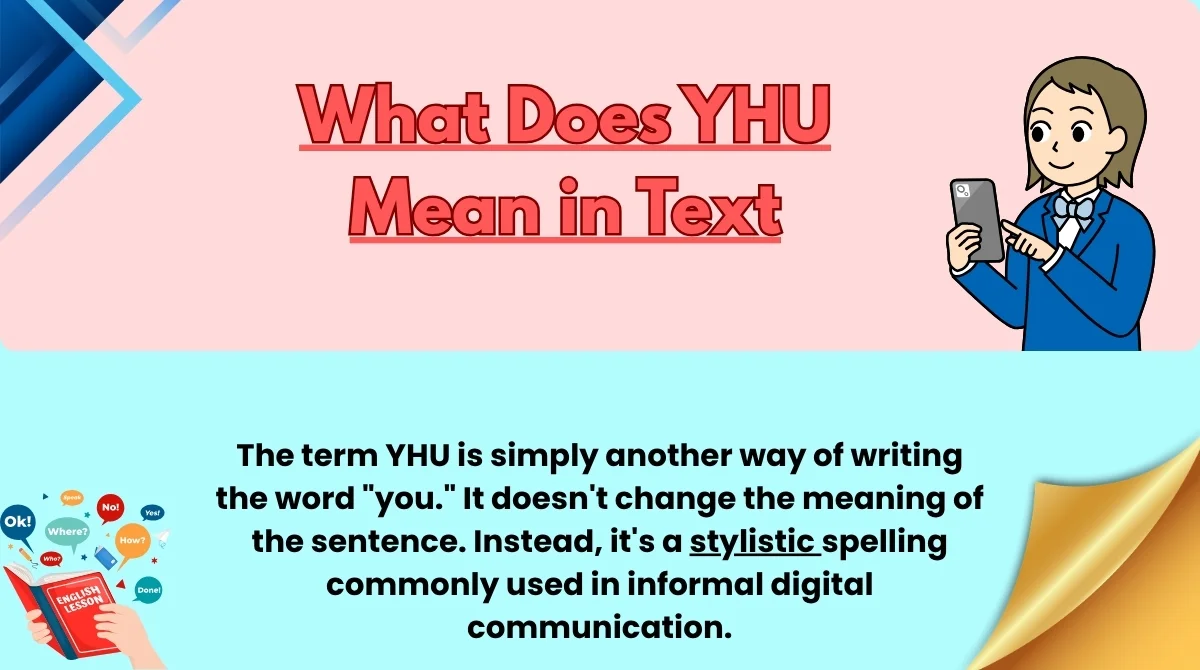
The term YHU is simply another way of writing the word “you.” It doesn’t change the meaning of the sentence. Instead, it’s a stylistic spelling commonly used in informal digital communication.
People often use YHU to make their messages stand out or sound more affectionate. In many cases, it’s also used because friends within certain online communities have adopted it as part of their texting style.
Here are a few everyday examples:
- “I miss yhu so much.”
- “Can yhu help me with this?”
- “I’m proud of yhu.”
In every example, replacing YHU with you keeps the sentence exactly the same. The difference is purely in style rather than meaning.
Origin and Background of the Term
Like many internet slang words, YHU didn’t originate from a dictionary or grammar book. Instead, it developed naturally through online communication.
During the rise of texting, instant messaging, and social networking platforms, users began experimenting with creative spellings. Some wanted their messages to look unique, while others adopted spellings commonly used within their friend groups.
Over time, words like “you” became “u,” “ya,” and eventually YHU. The spelling became especially popular on social media platforms where individuality and creative expression were encouraged.
Rather than following strict grammar rules, internet slang often reflects personality and community identity. YHU is a perfect example of how language evolves with technology and digital culture.
How YHU Is Used in Daily Life
Although YHU is informal, it’s surprisingly common in casual online conversations. Here are several practical situations where people might use it.
Text Messages
Friends often write:
- “How are yhu today?”
- “I’ll call yhu later.”
Social Media Captions
Someone posting a photo may write:
- “Love yhu forever.”
- “Thankful for yhu.”
Online Gaming
Gamers sometimes say:
- “Yhu played really well today.”
Group Chats
Friends chatting together may write:
- “Where are yhu guys?”
Romantic Conversations
Couples often use YHU in affectionate messages:
- “I can’t stop thinking about yhu.”
Casual Replies
Instead of saying:
- “Thank you.”
Someone may respond with:
- “Love yhu too.”
These examples show that YHU appears almost exclusively in friendly, relaxed conversations rather than professional settings.
Emotional or Practical Meaning of YHU
While YHU technically means the same thing as “you,” its emotional impact can sometimes feel different.
Many people believe that writing YHU adds a sense of warmth, closeness, or personality. It makes messages appear less formal and more conversational.
For example:
“I appreciate you.”
feels polite.
“I appreciate yhu.”
may feel more personal among close friends who commonly use internet slang.
This emotional connection explains why YHU remains popular despite not being grammatically standard.
In modern digital culture, language isn’t only about correctness—it’s also about expressing identity, building friendships, and creating a comfortable communication style.
Similar or Related Terms
Many internet slang words have similar meanings or functions.
- U – The shortest abbreviation for “you.”
- Ya – Informal version of “you.”
- Yu – Creative spelling used in casual chats.
- You – Standard English spelling suitable for all situations.
- Y’all – Refers to a group of people.
- Ur – Short for “your” or sometimes “you’re” depending on context.
Although these terms may look similar, each carries a slightly different tone and level of formality.
Common Misunderstandings About YHU
Many people misunderstand YHU when they first encounter it. Here are some common misconceptions.
People think it’s an acronym.
It isn’t. YHU doesn’t stand for multiple words. It’s simply a creative spelling of “you.”
People assume it’s incorrect English.
In formal writing, it would be considered non-standard. However, informal online communication follows different conventions.
People believe everyone uses it.
Not everyone does. Its popularity varies by age group, location, and online community.
People think it changes the meaning.
It doesn’t. Whether someone writes “you” or “YHU,” the intended meaning remains the same.
People assume it’s appropriate everywhere.
YHU is best reserved for casual conversations. Professional emails, school assignments, and business documents should use the standard spelling “you.”
Examples of YHU in Sentences
Here are some natural examples you might see online.
- I hope yhu have an amazing day.
- Thank yhu for always supporting me.
- I’ll text yhu when I get home.
- Do yhu want to grab lunch later?
- Everyone misses yhu at school.
- I can’t wait to see yhu tomorrow.
- Yhu always know how to make me smile.
- Happy birthday, yhu deserve the best!
These examples demonstrate how naturally the word fits into everyday digital conversations.
Why Understanding YHU Matters Today
The internet has changed the way people communicate. Every year, new slang words, abbreviations, and creative spellings emerge across social media platforms, messaging apps, and online communities.
Understanding terms like YHU helps you:
- Communicate more confidently online.
- Understand younger generations’ texting habits.
- Avoid confusion in conversations.
- Keep up with evolving internet language.
- Connect more naturally with friends and online communities.
Language constantly changes with the passage of time, and internet slang reflects those changes. While standard grammar remains important in professional communication, informal expressions like YHU have become part of modern digital culture.
Learning these terms doesn’t mean you have to use them yourself, but recognizing their meaning helps you navigate today’s online world with greater ease.
Frequently Asked Questions
What does YHU mean in simple words?
YHU simply means “you.” It’s an informal spelling commonly used in texting, social media, and casual online conversations.
Is YHU positive or negative?
YHU is generally neutral. Its meaning depends entirely on the sentence in which it’s used. It can appear in positive, negative, or neutral conversations.
Where is YHU commonly used?
You’ll most often see YHU in text messages, social media comments, online chats, gaming communities, and messaging apps among friends.
Is YHU formal or informal?
YHU is informal. It should only be used in casual conversations and isn’t suitable for professional emails, academic writing, or official documents.
Why do people search for YHU?
People often search for YHU after seeing it in a text message, social media post, or online conversation. Since internet slang changes over time, many users want to understand its meaning and use it correctly in modern digital communication.
Conclusion
Understanding what does YHU mean in text is much easier than it first appears. At its core, YHU is simply a creative and informal way of writing “you.” While it isn’t part of standard English, it has become a familiar expression across social media, texting apps, and online conversations.
As digital language continues to evolve, learning common internet slang helps you stay connected and communicate more naturally. Whether you choose to use YHU yourself or simply recognize it when others do, understanding these modern expressions makes online interactions smoother and more enjoyable.
Every new word you learn brings you one step closer to communicating with confidence in our ever-changing digital world.

Happy is a passionate content creator and blogger who loves sharing creative ideas, meaningful words, and trending content with readers worldwide.With a simple writing style and fresh perspective, Happy aims to make every article engaging, helpful, and enjoyable to read.