Have you ever received a message that simply said “GL!” and wondered what it meant? You’re definitely not alone.
Text messaging and social media are full of abbreviations that make conversations faster, but they can also leave people scratching their heads.
In most cases, GL means “Good Luck.” It’s a short, friendly way to wish someone success before an exam, interview, sports match, game, or any important event. Instead of typing two full words, people often use “GL” because it’s quick, convenient, and widely understood in digital conversations.
Knowing what GL means in text helps you avoid confusion and communicate more naturally online. Whether you’re chatting with friends, playing online games, or browsing social media, understanding this abbreviation makes modern communication much easier. Let’s explore its meaning, history, everyday uses, and why it remains one of the most popular internet abbreviations today.
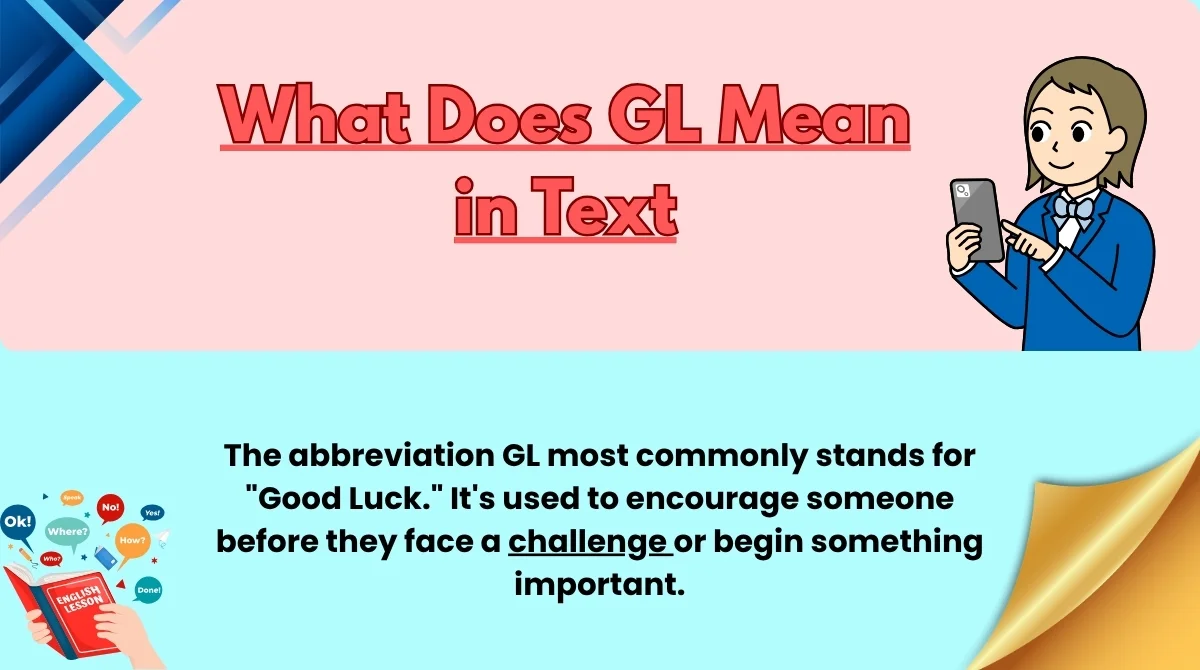
What Does GL Mean in Text?
The abbreviation GL most commonly stands for “Good Luck.” It’s used to encourage someone before they face a challenge or begin something important.
Rather than typing “Good luck!” every time, people simply write “GL.” The meaning stays exactly the same, but it’s much faster to type.
Here are a few everyday examples:
- Your friend has a driving test tomorrow, so you text, “GL! You’ll do great.”
- A classmate is about to take an important exam, and you message, “GL on your finals!”
- Before an online gaming match begins, teammates often type “GL HF,” which means “Good Luck, Have Fun.”
Although Good Luck is by far the most common meaning, the letters “GL” can have different meanings in specialized fields. For example, in business, they may represent “General Ledger,” while in technology they can refer to “Graphics Library.” However, when you’re texting or chatting online, Good Luck is almost always the intended meaning.
Origin and Background of the Term
Like many internet abbreviations, GL became popular as digital communication evolved.
Back in the days of SMS texting, people had limited characters and slow phone keyboards. Shortening common phrases saved both time and effort. Expressions like “LOL,” “BRB,” “OMG,” and “GL” quickly became part of everyday online language.
Online gaming also played a major role in spreading the abbreviation. Competitive games often begin with players wishing each other “GL HF” before a match. This tradition helped introduce the abbreviation to millions of gamers around the world.
As social media platforms, messaging apps, and online communities grew, GL became a universal expression of encouragement. Today, it’s recognized by people of all ages who regularly communicate online.
How GL Is Used in Daily Life
You’ll find GL in many everyday conversations, both online and through text messages.
Before Exams
Students often encourage each other with a quick message.
Example:
“GL on your chemistry exam!”
Job Interviews
Friends and family use it before interviews.
Example:
“You’ve prepared well. GL today!”
Online Gaming
Gamers frequently type:
“GL HF everyone!”
This creates a friendly atmosphere before competition begins.
Sports Events
Athletes often receive supportive messages.
Example:
“GL in your soccer final!”
Personal Goals
Whether someone is starting a business, moving to a new city, or beginning a new chapter in life, people often send a simple:
“GL! You’ve got this.”
These two letters carry genuine encouragement despite their simplicity.
Emotional or Practical Meaning of GL
Although GL is just two letters, it often carries genuine emotional support.
When someone wishes you good luck, they’re showing they care about your success. Even a short text can boost confidence before a stressful moment.
Imagine you’re nervous before an important presentation. Just before you begin, your friend sends:
“GL! Believe in yourself.”
That brief message may ease your anxiety and remind you that someone believes in you.
In today’s fast-paced digital world, people often communicate quickly. Abbreviations like GL make it easier to express kindness without writing long messages.
The phrase also helps strengthen relationships. Whether between friends, coworkers, classmates, or teammates, wishing someone good luck creates a positive connection.
Similar or Related Terms
Several abbreviations have meanings similar to GL, but each is used slightly differently.
- GLHF – Good Luck, Have Fun; commonly used before online games.
- HF – Have Fun; focuses on enjoying the activity.
- TY – Thank You; expresses appreciation.
- GG – Good Game; usually typed after a match ends.
- GM – Good Morning; a greeting used at the start of the day.
- GN – Good Night; used before going to sleep.
- BTW – By The Way; introduces additional information.
- IMO – In My Opinion; shares a personal viewpoint.
While these abbreviations may appear together in conversations, each serves a different purpose.
Common Misunderstandings About GL
Despite being simple, GL is sometimes misunderstood.
People Think It Has Only One Meaning
While Good Luck is the most common meaning in text messages, different industries may use GL differently.
Some Assume It’s Only for Gamers
Gaming helped popularize GL, but anyone can use it in daily conversations.
It’s Not an Informal Insult
Some people unfamiliar with internet slang worry that abbreviations may have hidden meanings. In most chats, GL is simply a friendly wish.
It Doesn’t Replace Genuine Support
Although short, GL can still express sincere encouragement, especially when sent at the right moment.
Context Always Matters
If you see GL in accounting or technology documents, it probably doesn’t mean Good Luck. Reading the surrounding text usually makes the intended meaning clear.
Examples of GL in Sentences
Here are some natural examples showing how GL is used.
- GL on your final exam tomorrow—you’ve studied hard.
- I know you’re nervous, but GL!
- GL with your first day at the new job.
- Everyone typed “GL HF” before the tournament started.
- GL on your driving test. Stay calm and confident.
- My sister texted me “GL” before my presentation.
- GL in your marathon this weekend—you’ll do amazing.
- I always send my friends GL before important interviews.
These examples show how flexible and friendly the abbreviation can be.
Why Understanding GL Matters Today
Modern communication happens faster than ever.
People exchange thousands of messages every day through texting apps, online games, workplace chats, and social media platforms. Understanding common abbreviations like GL helps you keep up with conversations without feeling lost.
It also prevents misunderstandings. Instead of wondering what someone meant, you’ll instantly recognize that they’re wishing you success.
For parents, teachers, professionals, and anyone learning digital communication, knowing internet abbreviations improves confidence when interacting online.
As language evolves, new abbreviations continue to appear. However, GL has remained popular because its message is timeless: encouraging others costs nothing but can mean a lot.
Frequently Asked Questions
What does GL mean in simple words?
In simple words, GL means “Good Luck.” People use it in text messages, chats, and online games to wish someone success before an important event.
Is GL positive or negative?
GL is a positive expression. It’s used to encourage someone and show support before they take on a challenge or begin something important.
Where is GL commonly used?
GL is commonly used in text messages, WhatsApp chats, social media, online gaming, workplace messaging apps, student conversations, and casual online communities. Over time, its use has expanded beyond gaming into everyday digital communication.
Is GL formal or informal?
GL is generally informal. It’s perfect for casual conversations with friends, family, classmates, teammates, and coworkers. In formal emails or professional documents, writing “Good luck” in full is usually more appropriate.
Why do people search for GL?
People search for what does GL mean in text because they receive the abbreviation in messages or see it on social media, gaming platforms, or chat apps. Since language changes with the passage of time, many internet abbreviations become popular quickly, making it useful to learn their meanings.
Conclusion
Understanding what does GL mean in text is surprisingly useful in today’s digital world. While it usually stands for Good Luck, those two simple letters represent encouragement, kindness, and support across countless online conversations.
Whether you’re texting a friend before an exam, cheering on a teammate, or wishing someone success in a new opportunity, GL is a quick yet meaningful way to show you care. As online communication continues to evolve, learning common abbreviations helps you stay connected and communicate with confidence.
A small message of encouragement can brighten someone’s day—never underestimate the power of wishing someone good luck.

Happy is a passionate content creator and blogger who loves sharing creative ideas, meaningful words, and trending content with readers worldwide.With a simple writing style and fresh perspective, Happy aims to make every article engaging, helpful, and enjoyable to read.