Have you ever been chatting online and noticed someone mention “PFP,” leaving you wondering what they’re talking about? You’re not alone.
With new internet slang appearing every day, it can feel like keeping up with online language is a full-time job.
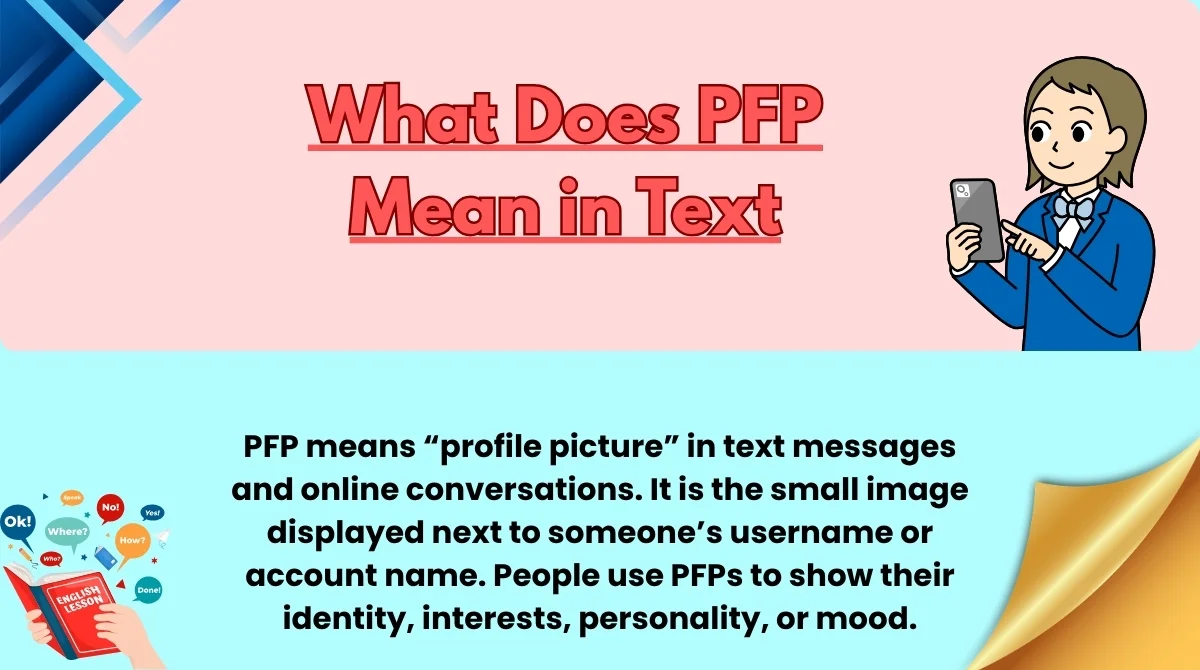
So, what does PFP mean in text? In most online conversations, PFP stands for “profile picture.” It refers to the image a person chooses to represent themselves on social media platforms, messaging apps, gaming accounts, or online communities.
Understanding terms like PFP matters because digital communication has become a major part of everyday life. A simple three-letter abbreviation can carry social meaning, show personality, and even influence how people are recognized online.
Whether you’re new to social media, joining an online community, or simply trying to understand younger internet users, knowing what PFP means can help you communicate more confidently and naturally.
What Does PFP Mean in Text?
PFP means “profile picture” in text messages and online conversations. It is the small image displayed next to someone’s username or account name. People use PFPs to show their identity, interests, personality, or mood.
For example, someone might say:
- “I changed my PFP yesterday.”
- “Your new PFP looks amazing.”
- “I don’t recognize you because you changed your PFP.”
In these examples, PFP simply refers to the picture representing a person’s online account.
Imagine joining a new gaming community. Before anyone knows your real name, they might recognize you by your PFP—a favorite character, a personal photo, a funny meme, or a creative design. Over time, that image can become connected to your online identity.
The meaning is usually straightforward, but the choice of a PFP can reveal a lot about someone’s personality and interests.
Origin and Background of the Term
The term “PFP” developed as internet communication became faster and more casual. Early online forums, chat rooms, and messaging platforms allowed users to choose images to represent themselves. As social media grew, profile pictures became an important part of digital identity.
Instead of typing the full phrase “profile picture,” internet users started shortening it to make conversations quicker. Similar to other online abbreviations like “LOL” (laugh out loud) and “DM” (direct message), PFP became a convenient shortcut.
The popularity of PFP increased with platforms such as social networks, online gaming communities, and discussion forums. Younger internet users especially adopted the term because quick communication is common in digital spaces.
Today, PFP is widely understood across many online communities. From casual conversations to professional networking platforms, people use profile pictures as a way to introduce themselves visually before saying a single word.
How PFP Is Used in Daily Life
PFP appears in many everyday online situations. Here are some common examples:
Social Media Profiles
People often talk about changing their PFP on platforms where users share photos, posts, and updates. A new PFP might represent a new style, celebration, hobby, or personal change.
Example:
“I updated my PFP because I wanted something more professional.”
Messaging Apps
Friends may notice when someone changes their profile picture on chat apps.
Example:
“Your PFP changed. Is that from your vacation?”
Gaming Communities
Gamers frequently use creative images, characters, or artwork as their PFP. These images help others recognize them during online interactions.
Example:
“Everyone knows me by my dragon PFP.”
Online Forums
Communities often use PFPs to create a sense of identity. A unique image helps members remember each other.
Example:
“I recognize your PFP from the cooking forum.”
Business and Professional Accounts
Even workplaces use profile pictures. A professional PFP can help create trust and recognition.
Example:
“Make sure your LinkedIn PFP looks professional.”
Creative Communities
Artists, designers, and creators may use custom artwork as their PFP to showcase their style.
Example:
“My friend designed my new PFP.”
Emotional or Practical Meaning of PFP
Although PFP technically means “profile picture,” it can represent much more than just an image.
For many people, a PFP is a small expression of identity. It can show their hobbies, beliefs, sense of humor, favorite characters, or personal achievements.
A person using a picture of a favorite movie character might be showing their interests. Someone using a family photo might be sharing something meaningful. Another person might choose a simple logo because they want a professional appearance.
In online spaces, where people cannot always see each other face-to-face, a PFP becomes a visual introduction. It creates familiarity and helps people feel connected.
A carefully chosen PFP can communicate a message before a conversation even begins. That’s why many people spend time selecting the right image for their online presence.
Similar or Related Terms
Here are some related internet terms and how they differ:
- Avatar: A digital image or character representing a person online. An avatar may be a PFP, but it is often more customized or fictional.
- Profile Picture: The full phrase that PFP represents. It refers to the image attached to an online account.
- DP (Display Picture): A term commonly used in some regions, especially South Asian countries, meaning the same thing as a profile picture.
- Icon: A small image used to represent an account, brand, or application.
- Username: The name people use to identify themselves online. Unlike a PFP, it is text-based.
- Banner: A larger image displayed on some profiles, often used alongside a PFP.
Common Misunderstandings About PFP
Even though PFP is simple, people sometimes misunderstand its meaning. Here are some common mistakes:
PFP Does Not Mean Personal Phone Picture
Some people assume PFP means a personal photo taken on a phone. However, it simply means profile picture. It can be any image, including artwork, logos, or illustrations.
A PFP Does Not Always Show a Real Person
Many users choose cartoons, animals, symbols, or fictional characters instead of their actual photo.
For example, a gamer may use a superhero image as their PFP.
PFP Is Not Only Used on Social Media
While social media is a common place for PFPs, they also appear on email accounts, gaming platforms, forums, and professional websites.
Changing a PFP Does Not Always Mean Something Major
Some people change their PFP for fun, seasonal events, trends, or simply because they like a new image.
PFP Is Not a Formal Business Term Everywhere
Although businesses use profile pictures, the abbreviation “PFP” is mostly casual internet language.
PFP and Avatar Are Not Always Identical
An avatar can be a type of PFP, but avatars often refer to more customized digital representations.
Examples of PFP in Sentences
Here are some natural examples of how people use PFP in everyday conversations:
- “I love your new PFP. It really matches your personality.”
- “Can you recognize me? My PFP is different now.”
- “I’m thinking about changing my PFP before starting my new job.”
- “Your gaming PFP looks awesome.”
- “Everyone in the group knows me by my funny cat PFP.”
- “I created a custom PFP for my online account.”
- “Your old PFP was easier to recognize.”
- “She uses the same PFP across all her social media accounts.”
Why Understanding PFP Matters Today
Online communication continues to evolve, and digital language plays an important role in how people connect. Learning terms like PFP helps you understand conversations, avoid confusion, and communicate more naturally.
For younger generations, online identity is often just as important as real-world identity. A PFP can represent creativity, personal branding, hobbies, and social connections.
Businesses and creators also understand the value of a recognizable profile image. A consistent PFP can help people remember a brand or individual across different platforms.
As the internet continues changing, new words and abbreviations will keep appearing. Understanding common terms allows people of all ages to participate more comfortably in digital conversations.
A small abbreviation like PFP may seem simple, but it reflects a bigger shift in how humans represent themselves and build relationships online.
Frequently Asked Questions
What does PFP mean in simple words?
PFP means profile picture. It is the image someone uses to represent their account online.
Is PFP positive or negative?
PFP is neither positive nor negative. It is simply a common internet abbreviation used to talk about profile pictures.
Where is PFP commonly used?
PFP is commonly used on social media platforms, messaging apps, gaming websites, online communities, and professional networking sites.
Is PFP formal or informal?
PFP is mostly informal internet language. In professional writing, it is usually better to write “profile picture” instead of using the abbreviation.
Why do people search for PFP meaning?
People search for PFP meaning because online abbreviations change quickly. New users often want to understand conversations happening on social media, gaming platforms, or messaging apps.
Has the meaning of PFP changed over time?
The basic meaning of PFP has remained the same, but its importance has grown. Today, a PFP is not just an image—it can be part of someone’s online identity, personal brand, or digital expression.
Conclusion
PFP is a simple but powerful internet abbreviation that means “profile picture.” It refers to the image people use to represent themselves online, whether it is a personal photo, artwork, logo, or favorite character.
As digital communication becomes a bigger part of everyday life, understanding terms like PFP helps people connect more easily. A profile picture may look like a small detail, but it can tell a story about personality, interests, and creativity.
The next time you see someone mention a PFP, you’ll know exactly what they mean—and you’ll understand the role that small image plays in the online world.
Every person has a story to share, and sometimes even a simple picture can be the first chapter.

Happy is a passionate content creator and blogger who loves sharing creative ideas, meaningful words, and trending content with readers worldwide.With a simple writing style and fresh perspective, Happy aims to make every article engaging, helpful, and enjoyable to read.