Ever heard someone say, “That guy is running a grift” and felt a bit lost? You’re not alone. The term “grift” pops up in movies, social media, and conversations, yet many people don’t truly know what it means.
Whether it’s someone hustling a quick scam or a lighthearted joke among friends, grasping the meaning of grift can help you understand people’s intentions and protect yourself from being duped.
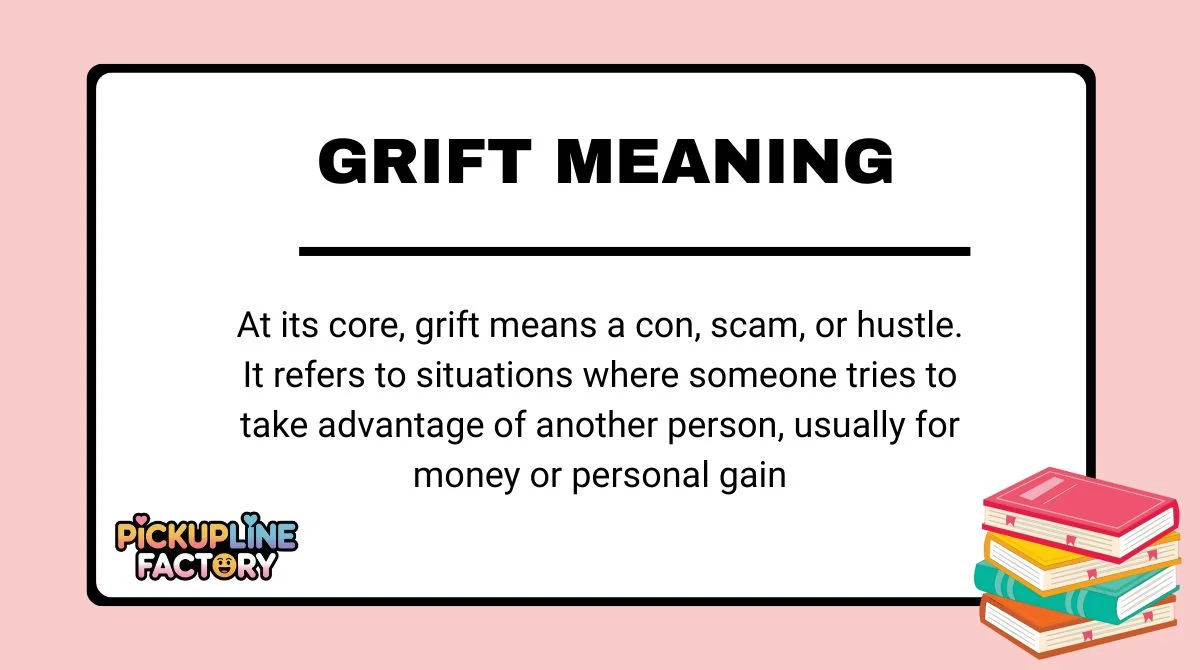
In simple words, a grift is a scheme, con, or scam designed to trick someone out of money, resources, or even trust.
But it’s not just about criminal activity—it can also describe clever hustles or clever maneuvers in everyday life.
Knowing how to spot a grift can save you from embarrassment, financial loss, and social pitfalls.
Plus, it’s a word that adds a little flair when describing sneaky moves—without sounding like you’re reading from a dictionary.
By the end of this article, you’ll not only understand grift fully but also know how it came about, how it’s used today, and why it matters in modern culture.
What Does Grift Mean?
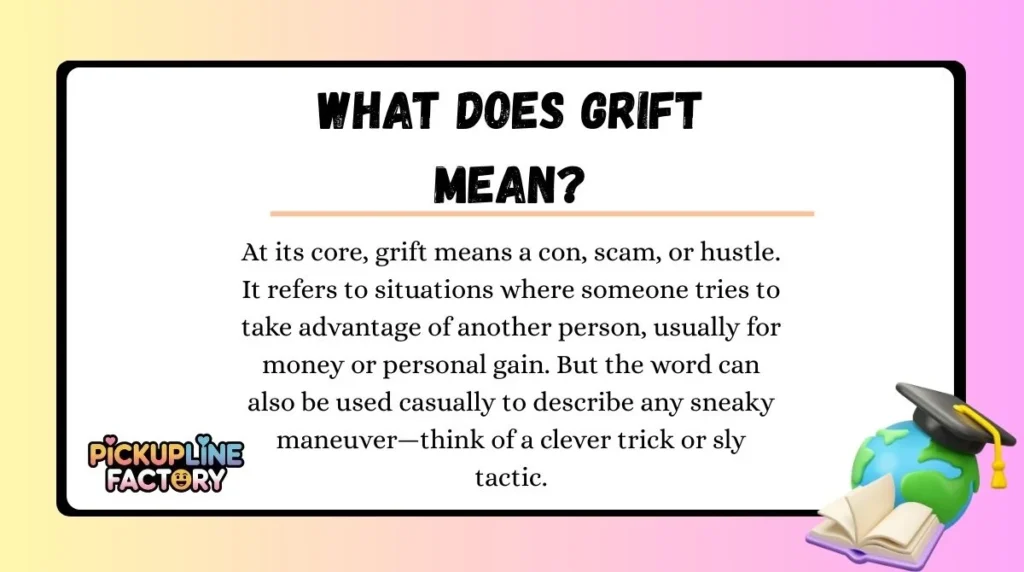
At its core, grift means a con, scam, or hustle. It refers to situations where someone tries to take advantage of another person, usually for money or personal gain. But the word can also be used casually to describe any sneaky maneuver—think of a clever trick or sly tactic.
Real-life examples help make it clearer:
- Someone selling “miracle” weight-loss pills online for $99 a bottle—that’s a grift.
- A coworker pretending they did extra work just to get a bonus? Mild grift.
- A street performer asking for donations and promising a free show, but then leaving abruptly—definitely a grift.
The key is deception for personal gain, whether it’s harmless or harmful.
Origin and Background of the Term
The term “grift” dates back to the early 20th century, emerging in American slang around the 1910s. It’s believed to have originated from the word “graft,” which meant dishonest gain or corruption, particularly in politics. Over time, “grift” evolved into a broader term for scams and hustles.
Picture this: early 1900s New York, bustling streets, and hustlers finding clever ways to make a quick buck. “Grift” was the perfect word for those who relied on charm, cleverness, and deceit rather than hard labor. Movies from the 1920s and 1930s often depicted grifters—slick, street-smart characters—showing that the term was part of popular culture even back then.
By the 1960s and 70s, “grift” became widely recognized in criminal lingo, describing everything from small scams to sophisticated cons. Today, it keeps its old-school charm while also being casually used in social media and pop culture.
How Grift Is Used in Daily Life
Grift isn’t just a word for con artists—it pops up in everyday life too. Here are a few practical examples:
- Online scams – Someone emails promising millions if you just pay a small fee. Total grift.
- Street hustles – Selling fake tickets at a concert. Classic grift.
- Corporate grift – Inflating expenses to get a reimbursement. Sneaky, but believable.
- Social media “influencers” – Promoting products they never use. Digital grift.
- Friendship grift – Borrowing money and “forgetting” to return it. Small but annoying.
- Dating grift – Someone charming you for financial gain. Sad, but real.
In short, anytime someone uses charm or deception for personal gain, you can call it a grift.
Emotional or Practical Meaning of Grift
Why does understanding grift matter emotionally and practically? Because it teaches awareness. Recognizing grifts protects your money, trust, and relationships. On a social level, calling out a grift can prevent harm and keep interactions honest.
Culturally, “grift” also carries a sense of storytelling. Movies, books, and TV shows celebrate the clever grifter—not just as a criminal, but as a symbol of wits and strategy. For modern readers, knowing the word helps navigate both real-life scams and cultural references, whether in films, memes, or social media threads.
Similar or Related Terms
Here’s a quick list of terms related to grift:
- Con – A general scam or swindle.
- Scam – A planned trick to steal money or resources.
- Hustle – Can be positive (hard work) or negative (deceptive gain).
- Fraud – Legal term for criminal deception.
- Rip-off – When someone overcharges or cheats you.
- Swindle – Taking money or property through deception.
Each term has a slightly different tone—grift tends to feel informal and sly, perfect for storytelling or everyday conversations.
Common Misunderstandings About Grift
People often confuse grift with other terms or misunderstand its usage. Let’s clear that up:
- Grift isn’t always criminal – Some grifts are clever, legal hustles.
- Not every trick is a grift – Magic tricks or jokes don’t count.
- It’s not formal language – Grift is casual slang.
- Grift isn’t just financial – It can involve trust, time, or attention.
- Grift isn’t inherently negative in storytelling – Some grifters are charming or clever.
- It’s not an everyday word in all regions – Mostly American English, though spreading online.
Examples of Grift in Sentences
- “That online ad promising free cash was clearly a grift.”
- “He’s always hustling side jobs, but I don’t think any of them are grifts.”
- “She realized the dating profile was a grift when he asked for money.”
- “The street performer’s disappearing act was just a small grift.”
- “Corporate grifts like fake invoices cost companies millions.”
- “Watching old movies, I love the clever grifters—they’re so smooth.”
- “Don’t fall for that email; it’s a classic grift.”
- “He’s a friendly guy, but he tends to grift small favors from everyone.”
Why Understanding Grift Matters Today
In today’s digital and fast-paced world, grifts have evolved from street hustles to online scams. Social media, dating apps, and email phishing make awareness crucial. Understanding grift helps you spot deception, make better financial decisions, and even navigate social situations wisely.
Plus, it’s culturally enriching. You’ll appreciate films, books, and memes featuring clever grifters, and understand slang that’s trending online. Essentially, knowing the meaning of grift is a tool for both safety and social savvy.
Frequently Asked Questions
What does grift mean in simple words?
Grift is a scheme, con, or scam, often using charm or trickery to get money, trust, or favors.
Is grift positive or negative?
Mostly negative, but it can be neutral or playful when describing clever tricks or hustles.
Where is grift commonly used?
In American English, movies, TV shows, social media, and informal conversations.
Is grift formal or informal?
Informal. It’s slang, often casual and conversational.
Why do people search for grift?
To understand scams, slang, movie references, or social media trends. It’s about safety, culture, and language curiosity.
Conclusion
Grift is more than just a word—it’s a window into human cunning, cleverness, and sometimes deception.
By understanding grift, you can protect yourself, navigate social situations smarter, and even enjoy the thrill of clever storytelling. Remember, spotting a grift isn’t just about money—it’s about awareness and insight.
Next time someone tries to charm you for personal gain, you’ll know exactly what’s going on. Stay sharp, trust your instincts, and embrace knowledge—it’s the best defense against deception.