Have you ever heard someone being called an “empress” and wondered what that really means?
The word might bring images of crowns, royal courts, and power, but it carries much more than just a title.
Understanding the empress meaning can help you appreciate not only historical royalty but also modern-day influences, personal empowerment, and cultural significance.
Whether you’re curious about history, language, or even using the term to describe someone powerful in your life, knowing what “empress” truly signifies can be eye-opening.
It’s more than just a word—it’s a symbol of authority, grace, and leadership. In this article, we’ll dive deep into the meaning, history, and practical use of “empress” in daily life.
By the end, you’ll see why this term continues to inspire people across generations.
What Does “Empress” Mean?
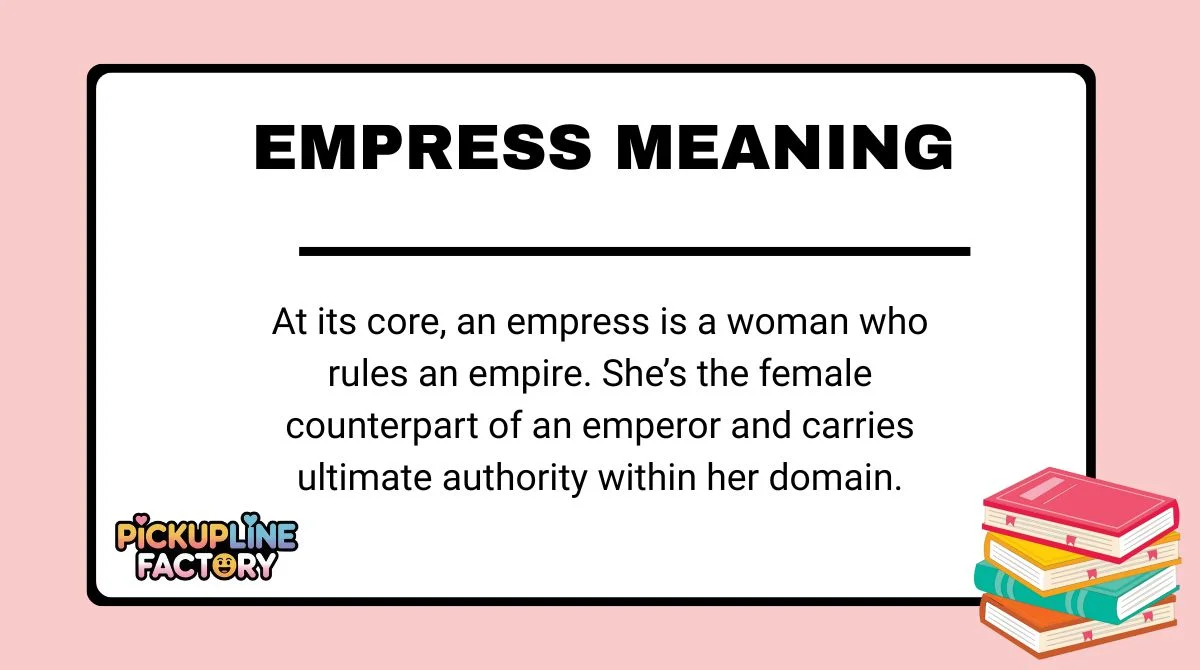
At its core, an empress is a woman who rules an empire. She’s the female counterpart of an emperor and carries ultimate authority within her domain. Unlike a queen, who may rule a kingdom, an empress typically governs a larger territory or multiple regions.
But the meaning goes beyond politics. In modern usage, calling someone an empress often highlights their strength, elegance, and leadership qualities. For example:
- A mother managing a large household with wisdom and authority might be called an “empress” of her home.
- A CEO running a successful company could be referred to as an empress in her field.
- Someone commanding respect in social or creative circles might earn the affectionate title of empress among friends.
So, whether literal or metaphorical, the term conveys power, respect, and influence.
Origin and Background of the Term
The word “empress” comes from the Latin “imperatrix”, which is the feminine form of “imperator”—a title used for emperors of Rome. Over centuries, it traveled through Old French as “impresse” before becoming the English word “empress”.
Historically, empresses weren’t just ceremonial figures. Many wielded significant political influence, such as Catherine the Great of Russia or Empress Wu Zetian of China, who reshaped their nations through bold reforms and strategic alliances. Their stories remind us that being an empress meant both power and responsibility.
The term also evolved culturally. In literature and art, empresses symbolize grace, wisdom, and control. Even tarot cards feature an Empress card, representing creativity, abundance, and nurturing energy—a modern nod to the word’s deep symbolic roots.
Empress vs Queen
The terms empress and queen are often confused, but they have distinct meanings and roles. An empress is the female ruler of an empire or the wife of an emperor, while a queen typically rules a kingdom or is the wife of a king. The main difference lies in the scale and structure of their rule—an empire is generally larger and may include multiple kingdoms.
For example, an empress holds a higher rank than a queen in traditional royal hierarchy. Historical figures like Empresses ruled vast territories, whereas queens governed smaller, more localized regions. However, both titles represent authority, leadership, and influence. In modern times, the distinction is mostly historical, as empires are rare, but queens still exist in constitutional monarchies.
Understanding the difference between empress and queen helps clarify royal titles in books, movies, and history. It also highlights how language reflects political structures and cultural traditions across different eras.
How “Empress” Is Used in Daily Life
While “empress” historically described rulers, today it’s widely used metaphorically. Here are some everyday examples:
- Social circles: “She walked into the room like an empress, and everyone noticed her presence.”
- Workplace: “As the team leader, she’s the empress of organization and efficiency.”
- Parenting: “My mom is an empress when it comes to handling family chaos.”
- Self-empowerment: People may say, “I’m channeling my inner empress today,” to embrace confidence.
- Fashion & aesthetics: A stylish outfit or commanding appearance can be described as giving “empress vibes.”
Even in casual conversation, calling someone an empress carries admiration, respect, and empowerment.
Emotional or Practical Meaning of “Empress”
Calling someone an empress isn’t just about authority—it’s emotional and symbolic. The term reflects:
- Strength: Leadership, resilience, and the ability to guide others.
- Elegance: Graceful influence, poise, and charm.
- Empowerment: Encouragement to own one’s space, decisions, and identity.
In modern society, using “empress” for someone you admire signals respect and recognition of both inner and outer strength. It’s a term that celebrates personal and professional mastery.
Similar or Related Terms
- Queen: Typically rules a kingdom; may share power with advisors.
- Emperor: Male equivalent of an empress; commands an empire.
- Monarch: General term for a sovereign ruler.
- Sovereign: Emphasizes supreme authority, often in legal or ceremonial context.
- Ruler: Broad term for someone in power, not necessarily royal.
The difference often comes down to scope of authority, gender, and cultural context.
Common Misunderstandings About “Empress”
- It’s only about royalty: Not true; it’s often metaphorical today.
- All empresses were powerful: Some were figureheads, but the term still conveys authority.
- It’s outdated: Modern language and culture have repurposed it for empowerment.
- It’s formal only: It can be casual, playful, or motivational.
- Empress equals perfection: The term celebrates influence, not flawlessness.
Clarifying these points helps use the word respectfully and effectively.
Examples of “Empress” in Sentences
- “She handled the meeting like an empress commanding her court.”
- “Every detail of her wedding was curated with empress-level precision.”
- “He called his grandmother the empress of family traditions.”
- “Walking into the stage, she exuded empress vibes.”
- “The author’s storytelling painted her as the empress of imagination.”
- “Even in chaos, she remained an empress of calm and control.”
- “The new CEO proved she was an empress of strategy and vision.”
- “Friends jokingly crowned her the empress of the weekend trip.”
Why Understanding “Empress” Matters Today
In a world that values leadership, equality, and empowerment, understanding empress meaning helps us:
- Recognize women’s achievements and historical significance.
- Use language that inspires confidence and respect.
- Appreciate cultural symbols and storytelling in media, literature, and art.
By grasping the term’s full depth, we connect history, personal empowerment, and social influence in meaningful ways.
Empress Meaning in French
The word empress in French is translated as “impératrice.” It comes from the Latin root imperator, meaning ruler or commander, which reflects authority and high status. In French language and culture, impératrice is used to describe a female ruler of an empire or the wife of an emperor. The term carries a sense of elegance, power, and historical richness, often associated with figures like Napoléon Bonaparte’s wife, Empress Joséphine.
Understanding empress in French is helpful not only for language learners but also for those interested in European history and royal terminology. The pronunciation (ɛ̃.pe.ʁa.tʁis) may seem tricky at first, but with practice, it becomes easier to use in conversation. Whether you’re reading French literature, watching historical films, or simply expanding your vocabulary, knowing the meaning of impératrice adds depth and cultural insight. It’s a word that reflects both linguistic beauty and the legacy of powerful women in history.
Empress Meaning in English
An empress is a female ruler who governs an empire or the wife of an emperor. In English, the word is commonly used to describe a woman who holds the highest rank in a monarchy, often ruling over multiple kingdoms, territories, or nations. The title carries a sense of great authority, leadership, and prestige. Historically, an empress could inherit the throne, gain the title through marriage, or be officially crowned as the supreme ruler of an empire. Beyond its historical meaning, the term is also used figuratively to describe a woman who demonstrates exceptional confidence, influence, or dominance in a particular field. For example, someone may refer to a successful businesswoman or cultural icon as the “empress” of her industry to highlight her remarkable achievements. In everyday English, the word appears in books, history lessons, news articles, and conversations about royal families. Understanding the empress meaning in English helps learners recognize both its literal definition and its symbolic use, making it easier to understand historical texts as well as modern expressions that celebrate powerful and respected women.
Frequently Asked Questions
What does “empress” mean in simple words?
It’s a woman with supreme authority, historically over an empire, or metaphorically, someone powerful and respected.
Is “empress” positive or negative?
Positive. It conveys strength, respect, and leadership.
Where is “empress” commonly used?
In historical contexts, literature, everyday compliments, motivational speech, and social media.
Is “empress” formal or informal?
Both. Historically formal, but modern usage can be casual or playful.
Why do people search for “empress”?
To understand history, empowerment, symbolism, or to describe someone admirable.
Conclusion
The word empress is more than a historical title—it’s a symbol of strength, elegance, and influence that resonates today.
From ancient rulers to everyday leaders, calling someone an empress celebrates power, resilience, and grace. So next time you see someone owning their space, remember: they might just be an empress in their own right.
Embrace your inner empress, and let your confidence and influence shine.

Happy is a passionate content creator and blogger who loves sharing creative ideas, meaningful words, and trending content with readers worldwide.With a simple writing style and fresh perspective, Happy aims to make every article engaging, helpful, and enjoyable to read.