In today’s digital world, short forms and slang have become a major part of online communication.
One of the most commonly used abbreviations in texting and social media is “WBU.” Many people, especially those new to texting culture or English slang, often search for its meaning when they see it in conversations on WhatsApp, Instagram, Snapchat, TikTok, or messaging apps.
“WBU” is a simple yet widely used expression that helps keep conversations fast, casual, and engaging.
It is mostly used in friendly chats where people want to ask about the other person’s opinion, condition, or situation without typing a long sentence.
Because online communication is all about speed and convenience, abbreviations like WBU have become extremely popular across different platforms and age groups.
Understanding WBU is important because it helps you respond correctly in conversations and avoid confusion.
It is especially common in casual chats, dating apps, and social media interactions. In this article, we will explore its meaning, background, usage in different contexts, misconceptions, and how you can properly respond when someone sends you “WBU” in a message.
Meaning & Definition of WBU in Text
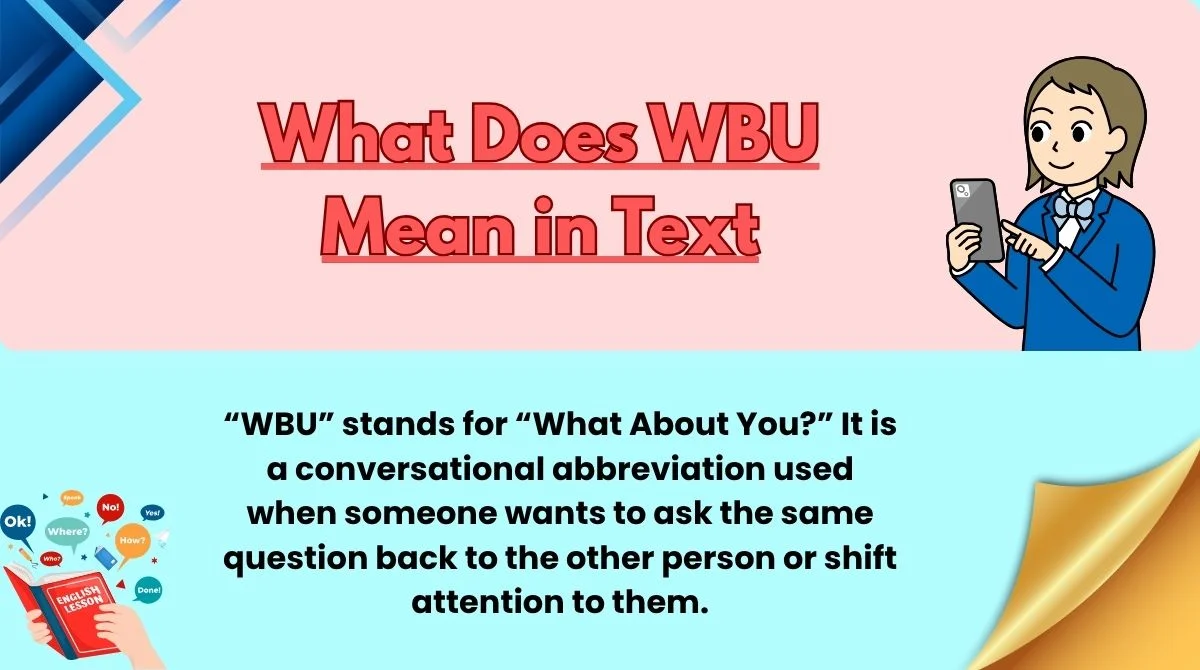
“WBU” stands for “What About You?” It is a conversational abbreviation used when someone wants to ask the same question back to the other person or shift attention to them.
For example:
- “I’m good, WBU?”
- “I like pizza. WBU?”
In both cases, the speaker is sharing their own answer and then asking the other person for theirs.
The purpose of WBU is to make communication shorter and more natural in informal conversations. Instead of typing “What about you?”, people prefer “WBU” because it is quicker and fits modern texting habits.
WBU is part of a larger group of internet slang known as acronyms. These acronyms help reduce typing effort and are widely understood among younger generations and frequent social media users. However, it is important to note that WBU is strictly informal and should not be used in professional or formal writing.
Background of WBU and Its Rise in Digital Communication
The abbreviation WBU became popular with the rise of SMS texting in the early 2000s. At that time, mobile phones had limited character space, so users started shortening common phrases to save time and message length. “What about you?” naturally turned into “WBU” as part of this trend.
Later, with the growth of instant messaging apps like WhatsApp, Messenger, and social media platforms, abbreviations became even more widespread. Internet culture encouraged fast replies, casual tone, and expressive shorthand language. WBU fit perfectly into this style of communication.
Over time, WBU became a standard part of online slang, especially among teenagers and young adults. It is now commonly understood globally wherever English-based online communication is used.
Usage of WBU in Different Contexts
WBU is mostly used in informal communication, but its tone can slightly change depending on context.
In casual chat, it is used to continue conversations:
- “I’m watching a movie, WBU?”
In friendly social media interactions, it helps maintain engagement:
- “Had a great day at the beach, WBU?”
In some semi-professional settings (like team chats), it may appear but is generally avoided because it is too informal.
In professional environments such as office emails or formal messages, WBU is not appropriate. Instead, full sentences like “What about you?” should be used for clarity and professionalism.
Overall, WBU is a conversational tool meant for quick, relaxed exchanges rather than formal communication.
Meaning of WBU in Chat, WhatsApp, Instagram, and TikTok
On platforms like WhatsApp, WBU is extremely common in one-on-one chats where people share updates and ask for responses.
Example:
- “I just finished work, WBU?”
On Instagram, it often appears in DMs or comments when users interact casually:
- “Nice photo! WBU? How was your trip?”
On TikTok, WBU may appear in comments or captions to engage viewers:
- “I love this trend, WBU?”
Across all platforms, the meaning remains the same: asking the other person about their situation or opinion. The tone is always informal, friendly, and conversational.
Meaning of WBU in Physics, Medical, and Aircraft Terminology
WBU does not have any recognized meaning in physics, medical science, or aviation terminology. It is purely an internet slang abbreviation used in digital communication.
However, in technical fields, similar abbreviations may exist, but “WBU” itself is not used professionally or scientifically. If you see it in such contexts, it is almost certainly unrelated to technical language and still refers to “What About You?” in casual messaging.
This is a common misconception among learners who assume every abbreviation has a technical meaning. In reality, WBU belongs only to informal online communication.
Common Misconceptions About WBU
One of the biggest misconceptions is that WBU has multiple meanings depending on context. In reality, its meaning is very consistent: “What About You?”
Another misconception is that WBU is formal or professional language. This is incorrect because it is strictly informal and used only in casual conversations.
Some people also confuse WBU with other abbreviations like WBY or WYD, but each has a different meaning and usage style.
Understanding these misconceptions helps prevent misuse in the wrong context.
Similar Terms & Alternatives to WBU
There are several similar abbreviations used in texting:
- WBY – What About You (alternative spelling)
- WY D – What You Doing?
- HBU – How About You?
- U? – Simple version asking “you?”
All of these serve similar conversational purposes, but “WBU” is specifically used when repeating or returning a question to the other person.
How to Respond to WBU in Conversations
When someone says “WBU?”, they are expecting your reply about your own situation.
Example response:
- “I’m fine too, just studying. WBU?”
- “I’m at home relaxing. WBU?”
The best response is to answer the question and continue the conversation by asking something back. This keeps the dialogue natural and engaging.
Ignoring WBU may stop the flow of conversation, so it is usually best to respond thoughtfully.
Differences Between WBU and Similar Words
WBU differs from similar slang in purpose and structure.
- WBU vs HBU: “WBU” is general, while “HBU” specifically asks about feelings or condition.
- WBU vs WYD: “WYD” asks about current activity, while WBU asks for general response or situation.
- WBU vs full sentence: WBU is informal shorthand, while full sentences are formal and clearer.
These differences help users choose the correct expression depending on tone and context.
Relevance of WBU in Online Conversations & Dating Apps
In online conversations and dating apps, WBU is commonly used to keep chats interactive and balanced. It shows interest in the other person and encourages them to share more about themselves.
Example:
- “I like traveling and music, WBU?”
On dating platforms, it helps create natural flow in early conversations. However, overusing slang can sometimes appear lazy or unprofessional, so balance is important.
Overall, WBU helps maintain engagement and keeps conversations two-sided rather than one-sided.
Conclusion
WBU is a simple yet powerful internet abbreviation meaning “What About You?” It is widely used in texting, social media, and casual online conversations to keep communication fast and interactive.
While it has no technical or formal meaning in professional fields, it plays an important role in modern digital communication.
Understanding WBU helps users respond correctly and participate naturally in conversations across platforms like WhatsApp, Instagram, and TikTok.
Whether you are chatting with friends or engaging in online discussions, knowing how and when to use WBU makes communication smoother and more effective in today’s fast-paced digital world.

Happy is a passionate content creator and blogger who loves sharing creative ideas, meaningful words, and trending content with readers worldwide.With a simple writing style and fresh perspective, Happy aims to make every article engaging, helpful, and enjoyable to read.