Have you ever heard a phrase that instantly sticks in your mind—like “Just Do It” or “Think Different”—and wondered why it feels so memorable?
That’s the magic of a tagline. In simple words, a tagline is more than just a catchy phrase; it’s a powerful tool that communicates identity, values, and emotion.
Whether in business, advertising, or personal branding, understanding what a tagline means can completely change how you perceive brands and ideas.
Many people confuse taglines with slogans, mission statements, or mottos—but the truth is, a tagline has a distinct purpose: it’s short, memorable, and designed to create a lasting impression.
Knowing the meaning of a tagline helps marketers craft better messages, helps writers understand branding, and even helps everyday people communicate their personal philosophy effectively.
In this article, we’ll dive into the meaning of a tagline, explore its origins, and show you real-life examples of how it’s used today.
By the end, you’ll see why a small phrase can have such a huge impact—and maybe even get inspired to create your own.
What Does Tagline Mean?
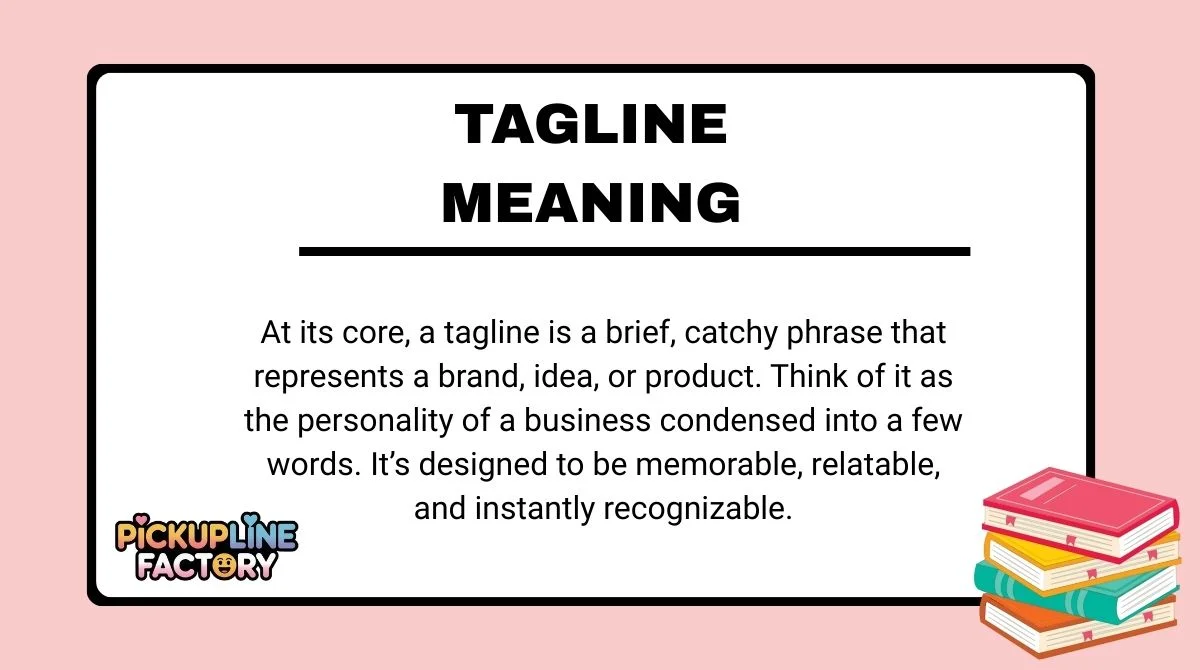
At its core, a tagline is a brief, catchy phrase that represents a brand, idea, or product. Think of it as the personality of a business condensed into a few words. It’s designed to be memorable, relatable, and instantly recognizable.
For example:
- Nike – “Just Do It”: Encourages action and motivation.
- Apple – “Think Different”: Represents innovation and creativity.
- L’Oréal – “Because You’re Worth It”: Appeals to self-confidence and empowerment.
These short phrases capture the essence of the brand without needing a long explanation. That’s why knowing the meaning of a tagline is important—not just for marketers, but for anyone who wants to communicate ideas effectively.
Origin and Background of the Term
The word tagline originated in the advertising world during the early 20th century. Originally, it was used to describe a line of text attached to an advertisement to “tag” the main idea”. Think of it like a label that highlights the most important point.
One of the earliest famous taglines was De Beers’ “A Diamond is Forever” in 1948. This simple line didn’t just sell diamonds; it shaped cultural perceptions of love, commitment, and luxury. Over time, taglines evolved beyond advertising. Businesses, movies, and even political campaigns started using them to communicate identity in one short, memorable phrase.
The storytelling behind a tagline makes it powerful. When crafted carefully, it sticks in people’s minds for decades, influencing behavior, emotions, and perceptions.
Tagline Meaning in English
In English, the word tagline means a short phrase or sentence used to describe, promote, or represent a product, company, movie, or idea. It is designed to be memorable, catchy, and easy to understand. Taglines are commonly used in advertising and branding to leave a strong impression on the audience. They often summarize the main message or value of something in just a few words. For example, businesses use taglines to explain their purpose, while movies use them to create excitement and attract viewers. A good tagline is usually simple, creative, and meaningful so people can remember it easily. In everyday English usage, tagline can also refer to a phrase associated with a person, campaign, or event. It helps create identity and recognition over time. The purpose of a tagline is to communicate quickly while making a lasting impact. In short, the meaning of tagline in English is a memorable phrase used to express the essence of a brand, product, or concept in a clear and appealing way.
How Tagline Is Used in Daily Life
You might think taglines are only for big brands—but they show up everywhere in everyday life:
- Business Branding: Companies use taglines to express core values, like Starbucks’ “Inspiring and nurturing the human spirit.”
- Political Campaigns: A simple line like “Yes We Can” motivates people and communicates a vision.
- Movies and TV Shows: “In space, no one can hear you scream” immediately tells you about the horror and sci-fi elements of Alien.
- Personal Branding: Freelancers or influencers may use taglines like “Helping You Thrive Online” to summarize their purpose.
- Products: A tagline on packaging, like Coca-Cola’s “Taste the Feeling”, connects the product to an emotional experience.
- Social Media: Users often create personal taglines in bios to summarize personality or interests.
Even outside business, taglines are a shortcut for expression, helping people communicate complex ideas in just a few words.
Emotional or Practical Meaning of Tagline
Taglines aren’t just marketing tools—they carry emotional weight. A great tagline can inspire, motivate, or build trust. For instance, L’Oréal’s “Because You’re Worth It” speaks to personal empowerment, while Nike’s “Just Do It” encourages action and courage.
Practically, taglines help:
- Identify brands quickly
- Connect emotionally with audiences
- Differentiate products or services
- Communicate a mission or philosophy
Culturally, taglines influence how people perceive trends, products, and ideas. They can shape language and thinking, making them small but mighty tools in daily life.
Similar or Related Terms
- Slogan: Usually promotional and temporary; designed for a specific campaign.
- Motto: Often more personal or organizational; emphasizes principles over marketing.
- Catchphrase: Can be humorous or entertaining; often from media or pop culture.
- Brand statement: Longer explanation of mission, values, and goals.
Key difference: A tagline is short, memorable, and evergreen, unlike temporary slogans or longer statements.
Common Misunderstandings About Tagline
- Tagline = Slogan: Not always. Slogans are often temporary; taglines are long-term identity markers.
- It has to rhyme or be funny: While catchy is good, clarity matters more.
- Only for big brands: Personal and small businesses benefit just as much.
- It’s optional: Without a tagline, a brand may miss emotional connection opportunities.
- It needs to explain everything: Taglines are hints, not essays.
- It can’t evolve: Many brands update taglines to stay relevant with changing times.
Examples of Tagline in Sentences
- Nike’s tagline, “Just Do It,” motivates people to push their limits.
- Apple’s “Think Different” inspires creativity and innovation.
- Coca-Cola’s “Taste the Feeling” connects drinkers with joy.
- A freelancer might use “Turning Ideas Into Reality” to attract clients.
- Disney’s “The Happiest Place on Earth” promises a magical experience.
- TED Talks’ “Ideas Worth Spreading” communicates its mission clearly.
- A personal tagline like “Helping You Achieve More Every Day” adds professionalism to a resume.
- Political campaigns often craft taglines to summarize visions in a phrase, like “Yes We Can”.
Why Understanding Tagline Matters Today
In a fast-moving, digital world, people remember words, not paragraphs. Understanding what a tagline means allows individuals and businesses to:
- Communicate effectively in limited space
- Connect emotionally with their audience
- Stand out in a crowded marketplace
- Build brand loyalty
Whether you’re creating a personal tagline or analyzing marketing campaigns, knowing its meaning gives you a competitive and cultural advantage. In today’s attention economy, a single phrase can make or break perception.
Tagline Meaning for Business
A tagline in business is a short and memorable phrase used to represent a company’s identity, values, or promise to customers. It is usually placed alongside a brand name or logo to help people instantly recognize what the business stands for. A strong tagline creates a lasting impression and can make a company stand out from competitors. Businesses use taglines to communicate their mission in just a few words, making them powerful tools for branding and marketing. For example, famous companies often use taglines that customers remember for years because they are simple, catchy, and meaningful. A business tagline can highlight quality, trust, innovation, or customer satisfaction depending on the brand’s goals. It helps customers emotionally connect with the company while reinforcing brand recognition. In today’s competitive market, having a clear and creative tagline is important because it can influence customer perception and loyalty. Whether for a startup or a large corporation, a tagline gives the business a stronger voice and identity. In simple words, a tagline for business is more than a slogan—it is the brand’s promise expressed in a few impactful words.
Frequently Asked Questions
What does tagline mean in simple words?
A tagline is a short, memorable phrase that represents a brand, idea, or person.
Is tagline positive or negative?
Mostly positive—it’s designed to inspire, communicate values, or make a brand memorable.
Where is tagline commonly used?
Taglines appear in advertising, personal branding, movies, political campaigns, and product packaging.
Is tagline formal or informal?
It can be both. The tone depends on the brand or context, but clarity and memorability are key.
Why do people search for tagline meaning?
People want to understand branding, marketing, or ways to communicate ideas effectively in a few words.
Conclusion
A tagline isn’t just words on a page—it’s a window into identity, values, and emotion. From Nike to personal brands, taglines help connect, inspire, and leave a lasting impression.
Understanding the meaning of a tagline empowers you to communicate better, brand smarter, and express yourself clearly.
So next time you craft a few words, remember: even the shortest phrase can carry a world of meaning.
Remember: Your words matter—choose them wisely, and they’ll carry your message far beyond what you imagine.

Happy is a passionate content creator and blogger who loves sharing creative ideas, meaningful words, and trending content with readers worldwide.With a simple writing style and fresh perspective, Happy aims to make every article engaging, helpful, and enjoyable to read.