Have you ever signed a contract, agreed to a deal, or even settled on house rules, and wondered about those tiny details that seemed so important?
Those little clauses, conditions, or agreements are often called stipulations. While it may sound like legal jargon, understanding the stipulation meaning is more practical than you think.
From contracts to everyday promises, stipulations play a role in making sure everyone is on the same page.
In simple terms, a stipulation is a specific condition, requirement, or agreement that must be met for something else to happen.
Think of it as a “rule within a rule” that clarifies exactly what’s expected. Whether you’re signing a lease, agreeing to a work arrangement, or even making plans with friends, knowing what a stipulation is—and how it works—can save you confusion, disputes, and even frustration.
By the end of this article, you’ll not only understand stipulations but also see how they influence your daily life, help you make better decisions, and even improve your communication skills.
What Does Stipulation Mean?
At its core, a stipulation is a condition or requirement agreed upon by parties involved in any arrangement. It’s like a little promise embedded in a bigger agreement.
For example:
- Renting an apartment: A lease may include a stipulation that pets aren’t allowed. Breaking this could lead to fines.
- Job contracts: Your contract might have a stipulation that you must complete a training program before taking on specific responsibilities.
- Event planning: A wedding venue might include a stipulation that alcohol cannot be served without a permit.
These examples show that stipulations aren’t just formalities—they’re practical rules that guide actions and expectations. In everyday life, stipulations ensure clarity and help avoid misunderstandings.
Origin and Background of the Term
The word “stipulation” comes from the Latin stipulatio, which referred to a verbal contract or promise. In Ancient Rome, a stipulatio was a formal agreement made through spoken words, often accompanied by a ritual gesture, such as a handshake.
Over time, the meaning evolved. By the Middle Ages, “stipulation” was used in legal documents and treaties to refer to specific conditions or clauses that parties had to meet. This historical perspective shows that stipulations have always been about clarity, commitment, and trust.
Interestingly, while the term has legal roots, its use has expanded into daily language. Today, you’ll hear it in everything from business negotiations to casual agreements—proving that the idea of clearly defined conditions is universally valued.
Stipulation Meaning in Relationship
In a relationship, a stipulation refers to a condition, expectation, or boundary that one person sets as part of the relationship. These stipulations are not always negative; in fact, they often help create healthy communication and mutual understanding between partners. For example, someone may say, “I’m happy to continue this relationship, but honesty is my main stipulation.” This means honesty is an important condition for the relationship to work. Stipulations can involve trust, respect, communication, personal space, or future goals. Healthy relationships usually include clear expectations so both people understand each other’s needs and limits. However, overly strict or controlling stipulations can sometimes create tension if they feel unfair or one-sided. That’s why balance and open discussion are important. Understanding the meaning of stipulation in relationships helps people communicate more clearly, avoid misunderstandings, and build stronger emotional connections based on respect, trust, and shared values.
How Stipulation Is Used in Daily Life
Stipulations aren’t just for lawyers or bureaucrats—they’re everywhere in everyday life. Here are some practical examples:
- Rental agreements: “No smoking inside” or “rent must be paid by the 5th of every month.”
- Employment contracts: “Completion of probation period is required for promotion.”
- Insurance policies: “Coverage is provided only if preventive maintenance is done annually.”
- School rules: “Students must submit assignments before the deadline to pass the course.”
- Friendship pacts or shared plans: “Everyone brings snacks for the movie night.”
- Online transactions: “Refund will only be provided if the product is returned within 30 days.”
Notice the pattern? Stipulations create expectations, accountability, and fairness in any situation, big or small.
Emotional or Practical Meaning of Stipulation
At first glance, stipulations may seem boring or restrictive. But they actually carry emotional and practical value. Think about it: knowing the rules helps reduce anxiety and prevents conflict. If everyone understands the conditions, there’s less room for miscommunication or disappointment.
On a deeper level, stipulations also show respect for others’ boundaries. For instance, if a friend sets a stipulation about quiet time during study hours, honoring it strengthens trust. In business, meeting contractual stipulations builds reputation and credibility.
In modern life, where agreements can be informal yet impactful, understanding stipulations can enhance relationships, prevent misunderstandings, and even boost confidence.
Similar or Related Terms
- Clause: A part of a legal document that explains a specific rule or condition. Similar to a stipulation but often more formal.
- Condition: Something that must happen before another event can take place. Less formal than stipulation.
- Provision: A statement in a contract detailing requirements or restrictions. Often used interchangeably with stipulation.
- Requirement: A need or necessity, sometimes mandatory. Can be everyday or formal.
- Term: A rule or limit set in an agreement. Usually broader than a stipulation.
Each term has nuances, but the common thread is clear communication of expectations.
Common Misunderstandings About Stipulation
- It’s only for lawyers. Wrong—stipulations exist in everyday life.
- It’s a punishment. Nope—it’s a guideline to ensure fairness.
- It’s optional. Not always—stipulations often must be followed to meet the agreement.
- All stipulations are complicated. Many are simple, like “no pets allowed.”
- Stipulations limit freedom. Actually, they can prevent misunderstandings and conflicts.
- It’s only written. Verbal stipulations are also valid in some contexts.
Examples of Stipulation in Sentences
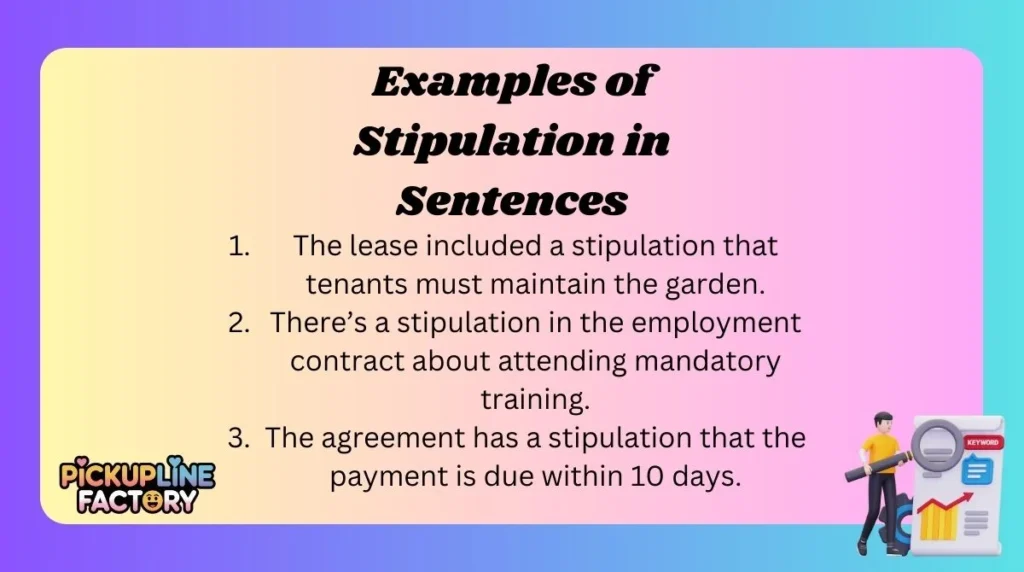
- The lease included a stipulation that tenants must maintain the garden.
- There’s a stipulation in the employment contract about attending mandatory training.
- The agreement has a stipulation that the payment is due within 10 days.
- A stipulation in the rental contract forbids subletting without permission.
- They agreed to a stipulation that everyone shares the cost of the party.
- The stipulation in the will stated that the inheritance be used for education.
- A stipulation in the gym membership requires advance notice for cancellations.
- The stipulation in the scholarship agreement is to maintain a minimum GPA.
Why Understanding Stipulation Matters Today
In today’s fast-paced world, agreements are everywhere—some formal, some casual. Understanding stipulations helps you navigate these agreements confidently. From legal contracts to shared responsibilities at work or home, being aware of stipulations ensures that you protect your interests, honor others’ expectations, and communicate clearly.
Moreover, it cultivates mindfulness. Knowing the stipulations in your agreements shows attention to detail and responsibility—qualities that build trust in both personal and professional relationships.
Stipulation Meaning for Kids
The word stipulation may sound difficult at first, but for kids, it simply means a rule, condition, or requirement that must be followed. Think of it like an agreement where someone says, “You can do this, but only if you follow this rule.” Parents, teachers, and even friends often use stipulations in everyday life without calling them that directly. For example, a parent might say, “You can play video games after homework is finished.” Finishing homework is the stipulation. In school, teachers may allow extra playtime with the stipulation that students complete their assignments first. Understanding stipulations helps kids learn responsibility, fairness, and how agreements work in daily life. It also teaches them that many opportunities come with certain expectations or rules. Even games have stipulations, like following instructions to continue playing. Learning simple words like stipulation improves vocabulary and communication skills while helping children understand how rules and agreements shape everyday situations in a fun and practical way.
Stipulation Meaning in Law
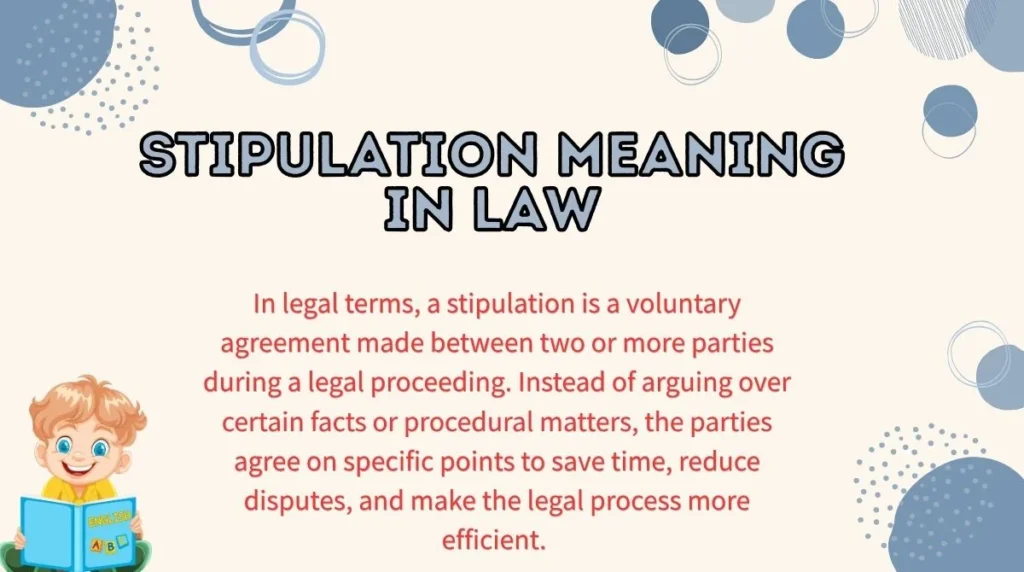
In legal terms, a stipulation is a voluntary agreement made between two or more parties during a legal proceeding. Instead of arguing over certain facts or procedural matters, the parties agree on specific points to save time, reduce disputes, and make the legal process more efficient. A stipulation can be made in writing or stated orally in court, depending on the rules of the jurisdiction and the approval of the judge. Once accepted by the court, it often becomes legally binding, meaning all parties are expected to follow its terms. Lawyers commonly use stipulations to agree on evidence, deadlines, facts, or procedural issues so the court can focus on the main legal questions. For example, two parties in a contract dispute may stipulate that a contract was signed on a certain date, eliminating the need to prove that fact during trial. Understanding the stipulation meaning in law is important because it highlights how legal agreements can simplify court proceedings, encourage cooperation, and help resolve disputes more efficiently while protecting the rights of everyone involved.
Frequently Asked Questions
What does stipulation mean in simple words?
It’s a specific rule or condition agreed upon by people involved in an arrangement.
Is stipulation positive or negative?
It’s neutral. Stipulations clarify expectations and prevent misunderstandings, which can be positive.
Where is stipulation commonly used?
Contracts, leases, job agreements, insurance policies, and even informal plans with friends or family.
Is stipulation formal or informal?
It can be both. Legal documents use it formally, but daily life uses it informally.
Why do people search for stipulation?
To understand agreements, clarify conditions, or avoid legal or social misunderstandings.
Conclusion
Stipulations may sound formal, but they play a vital role in everyday life. They clarify expectations, prevent conflicts, and help people navigate agreements with confidence. From legal contracts to casual friendships, understanding stipulations makes life smoother and relationships stronger.
Remember: a clear stipulation today prevents confusion tomorrow, and understanding them is a step toward smarter, more mindful living.

Happy is a passionate content creator and blogger who loves sharing creative ideas, meaningful words, and trending content with readers worldwide.With a simple writing style and fresh perspective, Happy aims to make every article engaging, helpful, and enjoyable to read.